Chim-Pom (stylized “Chim↑Pom”) is an artist collective formed in Tokyo in 2005, when all the members were in their twenties. The six members are Ellie (エリイ), Ryūta Ushiro (卯城竜太), Yasutaka Hayashi (林靖高), Masataka Okada (岡田将孝), Toshinori Mizuno (水野俊紀) and Motomu Inaoka (稲岡求).
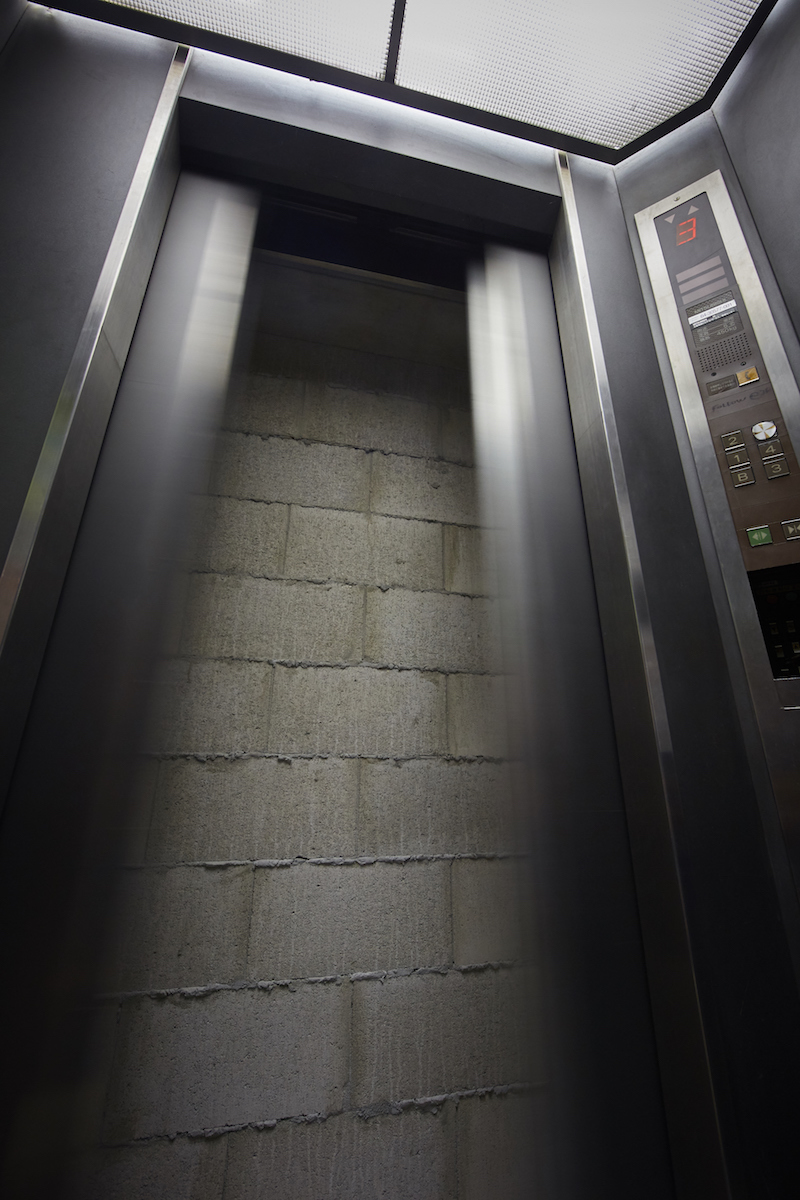
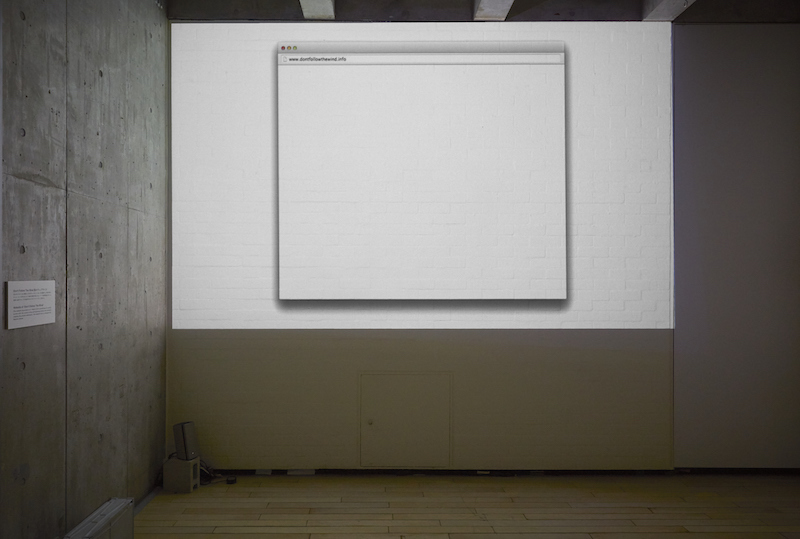
Chim-Pom organized Don’t Follow the Wind, a long term exhibition started in 2012.It takes place inside the inaccessible radioactive Fukushima exclusion zone formed after the nuclear disaster. Initiated by Chim↑Pom and co-developed with the curators Kenji Kubota, Eva & Franco Mattes, and Jason Waite. They collaborated with displaced local residents and includes 12 artists developing new work inside the zone: Ai Weiwei, Aiko Miyanaga, Chim↑Pom, Grand Guignol Mirai, Nikolaus Hirsch and Jorge Otero-Pailos, Kota Takeuchi, Eva & Franco Mattes, Meiro Koizumi, Nobuaki Takekawa, Ahmet Ögüt, Trevor Paglen, and Taryn Simon.
Don’t Follow The Wind: A Walk in Fukushima
20th Biennale of Sydney, Carriageworks
18 March 2016 – 5 June 2016
http://chimpom.jp/project/dfw.html
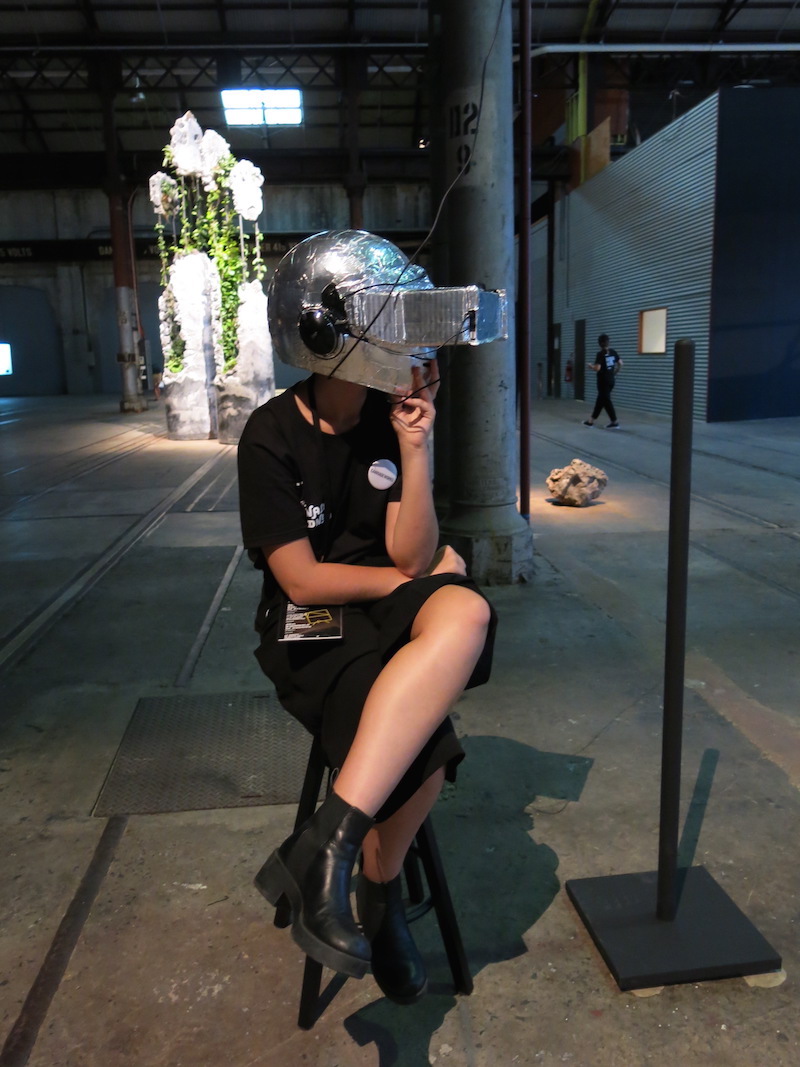
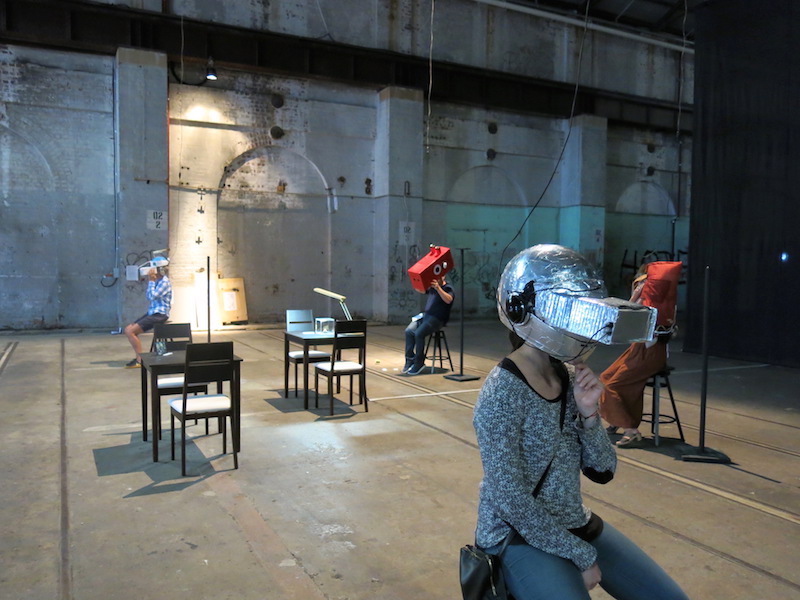
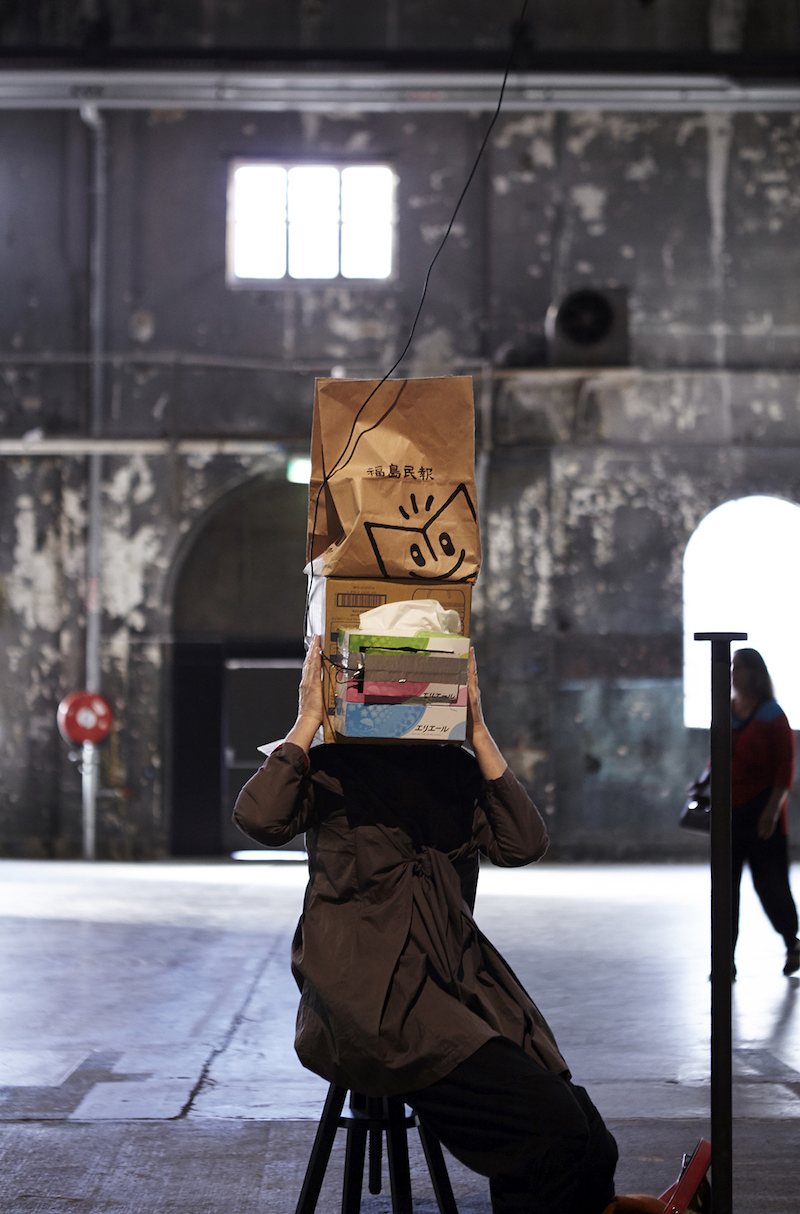
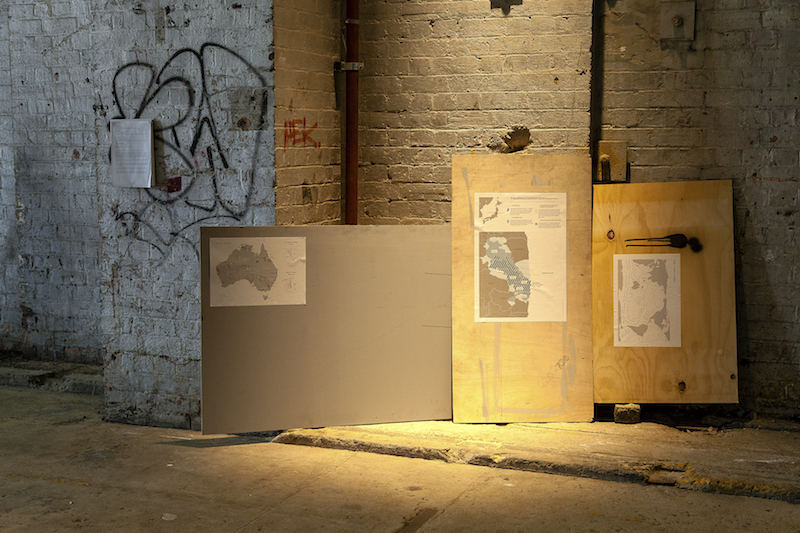
The curatorial collective of Don’t Follow the Wind developed a 360 degree video, A Walk in Fukushima, to make visible some of the inaccessible, irradiated sites of the exhibition inside the Fukushima exclusion zone, however the artworks in the project remain unseen, obscured by bodies of the artists and curators. The video includes the account of a displaced resident whose home is heavily contaminated and his ambivalence about having worked for TEPCO the power company which own the nuclear plant that had a meltdown. The video was displayed inside headsets made by the mother, father and grandmother of artist Bontaro Dokuyama who all live in Fukushima near the exclusion zone in an area deemed ‘safe’ for inhabitation but the low level contamination has radically changed their everyday way of life. They constructed the headset with objects based on their present needs and desire to find a more ordinary life in the future. As part of the installation decontaminated furniture from an unopened cafe on one of the sites of Don’t Follow the Wind in the zone, which was planning to hold its grand opening on 8 April 2011 but has been postponed indefinitely due to the disaster.
LEVEL7feat.Myth of Tomorrow
The huge mural Myth of Tomorrow by Taro Okamoto in Shibuya station is a chronicle of the nuclear exposure of Japan.Witnessing the atomic bombing in Hiroshima and Nagasaki and the hydrogen bomb exposure of the Lucky Dragon 5, radiation has traveled through the 20th century and to the present day over centuries, from war to peace, together with the safety myth of the nuclear power plant.Myth of Tomorrow was completed in an unnatural form due to the shape of a hotel where the work was originally located. In the mural, the Pacific Ocean, with the Lucky Dragon 5 being exposed to nuclear ash, spans its horizon from under the central figure of a burning man to the lower bottom, where the horizon is interrupted with a blank space.The margin was left as an ordinary wall, providing a prophetic blank to the 21st century. In 2011, reality updated this chronicle. Chim↑Pom added the figure of the explosion at the Fukushima Daiichi Nuclear Power Station to the blank, as a figure “unexecuted” by Taro Okamoto himself and as the reality of all the Japanese people living after Hiroshima. LEVEL 7 feat. “Myth of Tomorrow” will always be together with Myth of Tomorrow forever. To see the work through its absence must require our imagination instead of eyes, just as to conceive of history or radiation We believe imagination is the very possibility for ground zero, and the most fundamental power to create the future. And we believe art exists as such.
LEVEL7feat.明日の神話
http://chimpom.jp/project/real-times.html#lev7