The Chernobyl disaster occurred on April 26, 1986, at the Chernobyl Nuclear Power Plant in northern Ukraine, then part of the Soviet Union. During a late-night safety test at Reactor No. 4, a combination of design flaws in the RBMK reactor and serious operator errors caused a sudden power surge. Two explosions blew the reactor apart, exposing its core and igniting a graphite fire that burned for days, releasing massive amounts of radioactive material across Ukraine, Belarus, Russia, and much of Europe.
In the immediate aftermath, Soviet authorities struggled to contain the disaster and delayed public acknowledgment. The nearby city of Pripyat, home to nearly 50,000 people, was evacuated only 36 hours later. Hundreds of thousands of soldiers, engineers, firefighters, and civilians—later known as “liquidators”—were mobilized to extinguish fires, decontaminate land, and construct a concrete and steel sarcophagus to entomb the ruined reactor. Many were exposed to dangerous radiation levels, with long-term health consequences still debated today.
Chernobyl became a turning point in global nuclear policy and in the history of the Soviet Union itself, exposing systemic secrecy, accelerating public distrust, and contributing to reforms under glasnost. The surrounding Exclusion Zone remains largely uninhabited, a stark landscape where abandoned cities, contaminated forests, and decaying infrastructure testify to the disaster’s enduring legacy.
Photographers who documented Chernobyl include:
Igor Kostin, who took some of the earliest and most iconic photographs immediately after the explosion
Volodymyr Repik and Alexander Kupny, who documented the liquidators and the damaged plant in the Soviet period
Robert Polidori and Gerd Ludwig, who later chronicled the long-term human and environmental aftermath of Chernobyl
Igor Kostin
27 April, 1986:
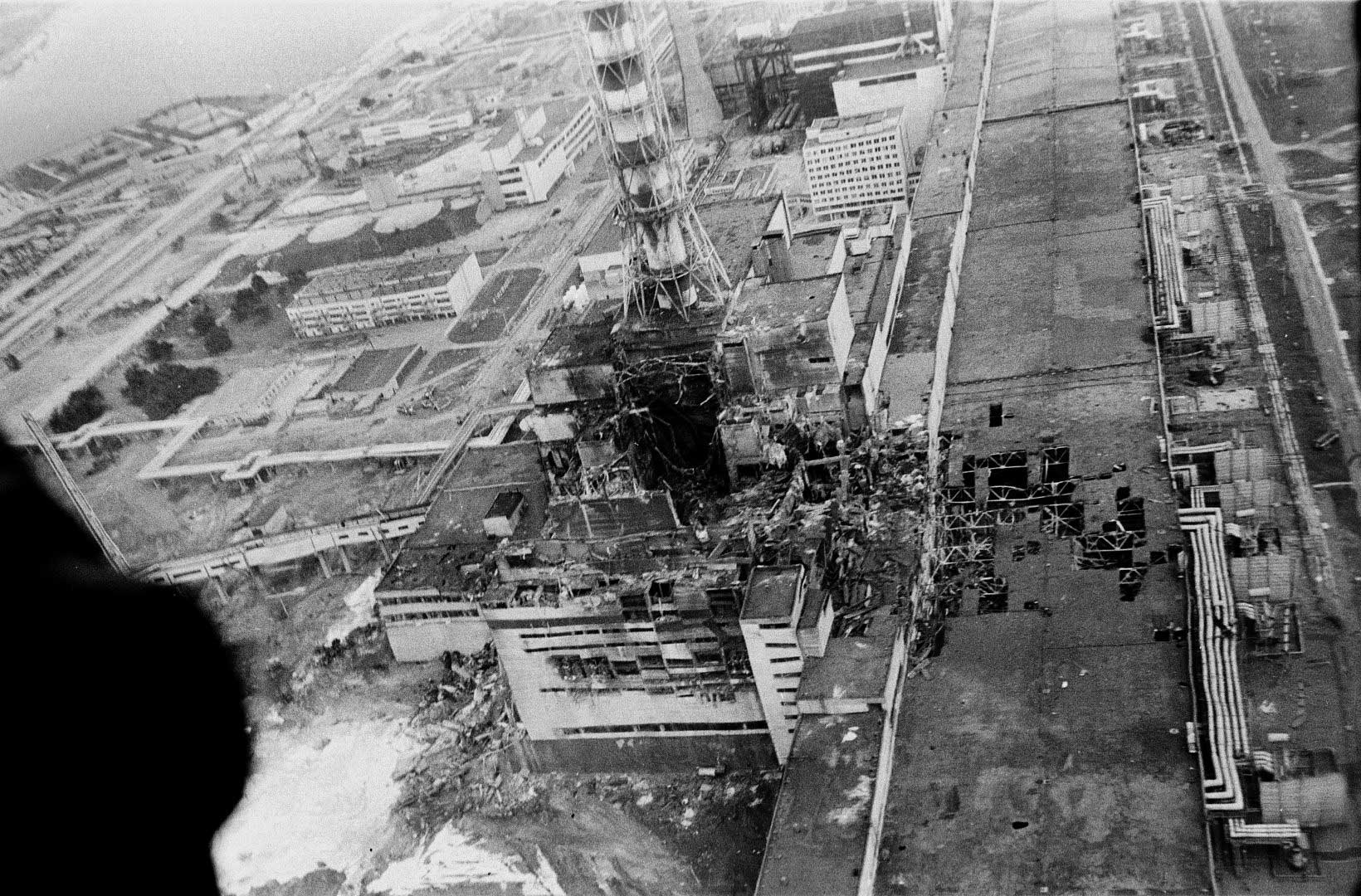
The first photo to be taken of the reactor, at 4pm, 14 hours after the explosion. This was taken from the first helicopter to fly over the disaster zone to evaluate radiation levels. The view is foggy due to radiation, which also explains why the shot was not taken too close to the window. Later, radiation experts learnt that at 200 metres above the reactor, levels reached 1500 rems, despite the fact that their counters did not exceed 500 remsKostin photographed Chernobyl from a helicopter within hours of the disaster, this is the only photograph to survive the intense radiation. May 1986:
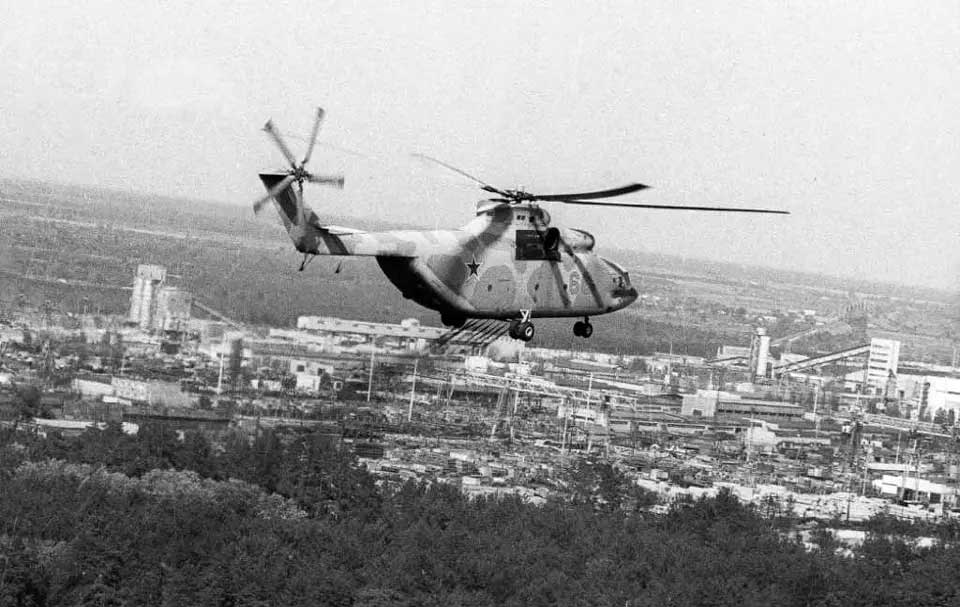
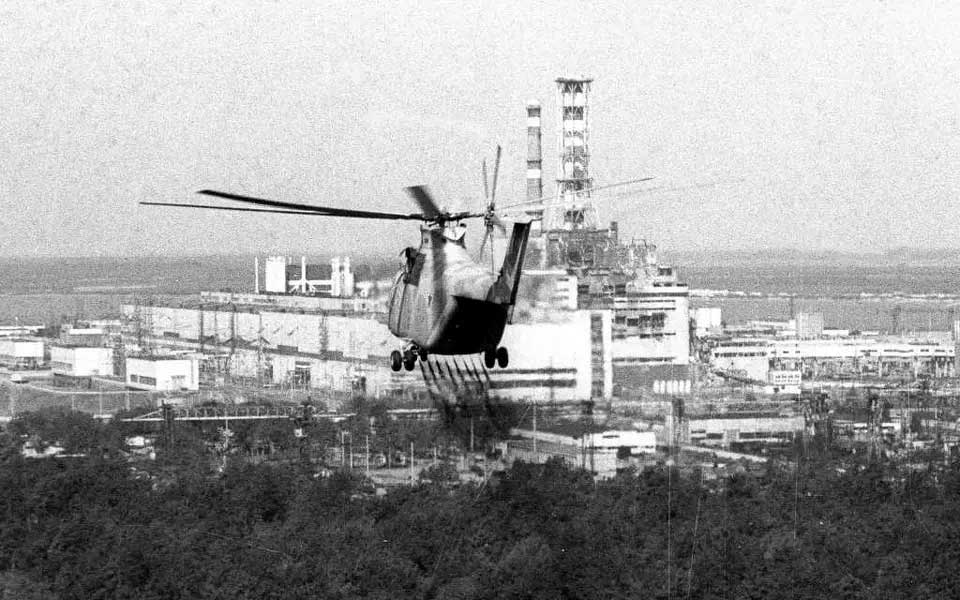
A helicopter decontaminates the disaster site. After the explosion, the nuclear power station was covered in radioactive dust. Aircraft and helicopters flew over the site, spraying sticky decontamination fluid that fixed the radiation to the ground. Workers known as 'liquidators' then rolled the dried remains like a carpet and buried the nuclear wasteOctober 1986:
To mark the end of the clean-up operation atop reactor 3, the authorities ordered three men to attach a red flag to the summit of the chimney. A group of liquidators had already made two fruitless attempts by helicopter, so the three men had to climb the 78 metre chimney via a spiral staircase, despite the dangerous radiation levels. Radiation expert Alexander Yourtchenko carried the pole, followed by Valéri Starodoumov with the flag, while lieutenant-colonel Alexander Sotnikov ascended with the radio. The whole operation was timed to last only 9 minutes given the high radiation levels. At then end, the trio were rewarded with a bottle of Pepsi (a luxury in 1986) and a day offFollowing orders issued by Soviet authorities to mark the end of cleanup operations on the roof of the No. 3 reactor, three men were requested to post a red flag atop the chimney overlooking the destroyed reactor, reached by climbing 78 meters up a spiral staircase. The flag bearers were sent despite the dangers posed by heavy radiation, and after a group of liquidators had already made two failed attempts by helicopter. The radiation expert Alexander Yourtchenko carried the pole, followed by Valéri Starodoumov with the flag, and Lieutenant Colonel Alexander Sotnikov with the radio. The whole operation was timed to last only 9 minutes, given the high radiation levels. At the end, the trio were rewarded with a bottle of Pepsi (a luxury in 1986) and a day off.12 October 1991:
Few people know that there was a second explosion at the Chernobyl nuclear power station on 11 October, 1991 in the turbine hall of reactor 2. Liquidator friends contacted Kostin, who immediately visited the site accompanied by his wife, Alla, who, too worried to stay at home, spent the whole night at a control post as she was not authorised to enter. The roof was blown off but, fortunately, there was no radioactive leakIgor Kostin Summer 1986:
The majority of liquidators were men called up from military reserves because of their experience in clean-up operations or chemical protection units. The army did not have adequate uniforms for use in radioactive conditions, so those enlisted had to cobble together their own clothing made from lead sheets measuring 2-4mm thick. These sheets were cut to size to make aprons covering their bodies in front and behind, especially to protect the spine and bone marrow. 'The clever ones also added a vine leaf for extra comfort,' said KostinIgor Kostin A liquidator, outfitted with handmade lead shielding on his head, works to clean the roof of reactor No. 3.After the evacuation of Chernobyl on 5 May, 1986, liquidators wash the radioactive dust off the streets using a product called “bourda”, meaning molasses. Chernobyl had about 15,000 inhabitants before the accident.September 1986:
Liquidators clean the roof of reactor 3. Initially, workers tried clearing the radioactive debris using West German, Japanese and Russian robots, but they could not cope with the extreme radiation levels, so the authorities decided to use humans. Employees could not stay any longer than 40 seconds any one time, before the radiation dose they received reached the maximum a human should receive in his entire life. Many liquidators have since died or suffer from severe health problemsMay 1986:
In the 30km no-go zone around the reactor, liquidators measure radiation levels in neighbouring fields using antiquated radiation counters, wearing anti-chemical warfare suits that offer no protection against radioactivity, and "pig muzzle" masks. The young plants will not be harvested, instead used by scientists to study genetic mutations in plantsIgor Kostin September 1986:
Liquidators clean the roof of reactor 3. Initially, workers tried clearing the radioactive debris using West German, Japanese and Russian robots, but they could not cope with the extreme radiation levels, so the authorities decided to use humans. Employees could not stay any longer than 40 seconds any one time, before the radiation dose they received reached the maximum a human should receive in his entire life. Many liquidators have since died or suffer from severeThe majority of the liquidators were reservists ages 35 to 40 who were called up to assist with the cleanup operations or those currently in military service in chemical-protection units. The army did not have adequate uniforms adapted for use in radioactive conditions, so those enlisted to carry out work on the roof and in other highly toxic zones were obliged to cobble together their own clothing, made from lead sheets and measuring two to four millimeters thick. The sheets were cut to size to make aprons to be worn under cotton work wear, and were designed to cover the body in front and behind, especially to protect the spine and bone marrow.A team of human liquidators prepares to clear radioactive debris off the roof of the No. 4 reactor.The village of Kopachi is buried, house by house in August 1987. It was located 7km from the Chernobyl reactor that housed the control room and decontamination area in the months after the disaster. A bulldozer would dig a large trench in front of each house before burying the building and covering it with earth and flattening the soil. Entire villages would be buried this way..A bulldozer digs a large trench in front of a house before burying the building and covering it with earth. This method was applied to entire villages that were contaminated after the Chernobyl disaster.November 1986:
Hans Blix (centre), the director of the International Atomic Energy Agency, watches a video detailing the clean-up operations with members of a government commission. Blix became a central figure of the disaster clean-up, visiting the Chernobyl site several times and overseeing the building of the sarcophagusJanuary 1987:
In a specialist radiation unit in Moscow, a liquidator is examined by a doctor in a sterile, air-conditioned room after an operationAt Moscow’s No. 6 clinic, which specializes in radiation treatment, a patient recovers after a bone-marrow operation. A doctor examines the patient in a sterile room. The examination is carried out in an individual, air-conditioned chamber via specially created openings to avoid direct contact and contamination.1988: Relatives attend the funeral of radiation expert Alexander Goureïev, one of the liquidators who cleared the roof of reactor 3. These experts were often referred to as “roof cats”. Goureïev died as a result of contracting a radiation-related illness.Dead fish are collected by an artificial lake within the Chernobyl site that was used to cool the turbines, June 1986. The fish, which died from exposure to radiation, are abnormally large and flabby. They jumped out of the lake where they could be picked up by the bare hands of any passerby.Ukrainian Academy of Sciences member holds a mutated colt in Zhytomyr, Ukraine. The colt was dubbed “Gorbachev colt” after a life-size photo of it was brought to the Supreme Soviet in 1988 to show Soviet President Mikhail Gorbachev what Chernobyl was doing the country’s wildlife.Kostin can be seen here, reflected in the window of a control post at the Pripyat entrance. The ghost town contained very high radiation levels of 171 microroentgen/hour five years after the catastrophe1988:
Jitomir, Ukraine. Contaminated and abandoned fields and a disused road lie within the no-go area around the Chernobyl siteKostin discovered this deformed child in a special school for abandoned children in Belarus, 1988. The photo was published in the local Belarus press and the boy nicknamed ‘the Chernobyl Child’. It was then subsequently printed in German magazine Stern and became a world-famous image. The child was adopted by a British family, underwent several operations and is now living a relatively normal life
1992:
The evacuated city of Pripyat. Before the disaster, it housed 47,000 inhabitants, including 17,000 children. Due to its contamination by plutonium isotopes, Pripyat cannot be inhabited for another 24,000 years. It was built to house Chernobyl workers in the 1970s, and was one of the "youngest" towns in the USSR with an average age of 26. Other unofficial evacuations also took place including in Kiev, where children were reported to have been put on trains in great numbersDecember 1989:
Contaminated apples hang unharvested from a tree within the 30km no-go area around the nuclear site, three years after the explosion
Volodymyr Repik
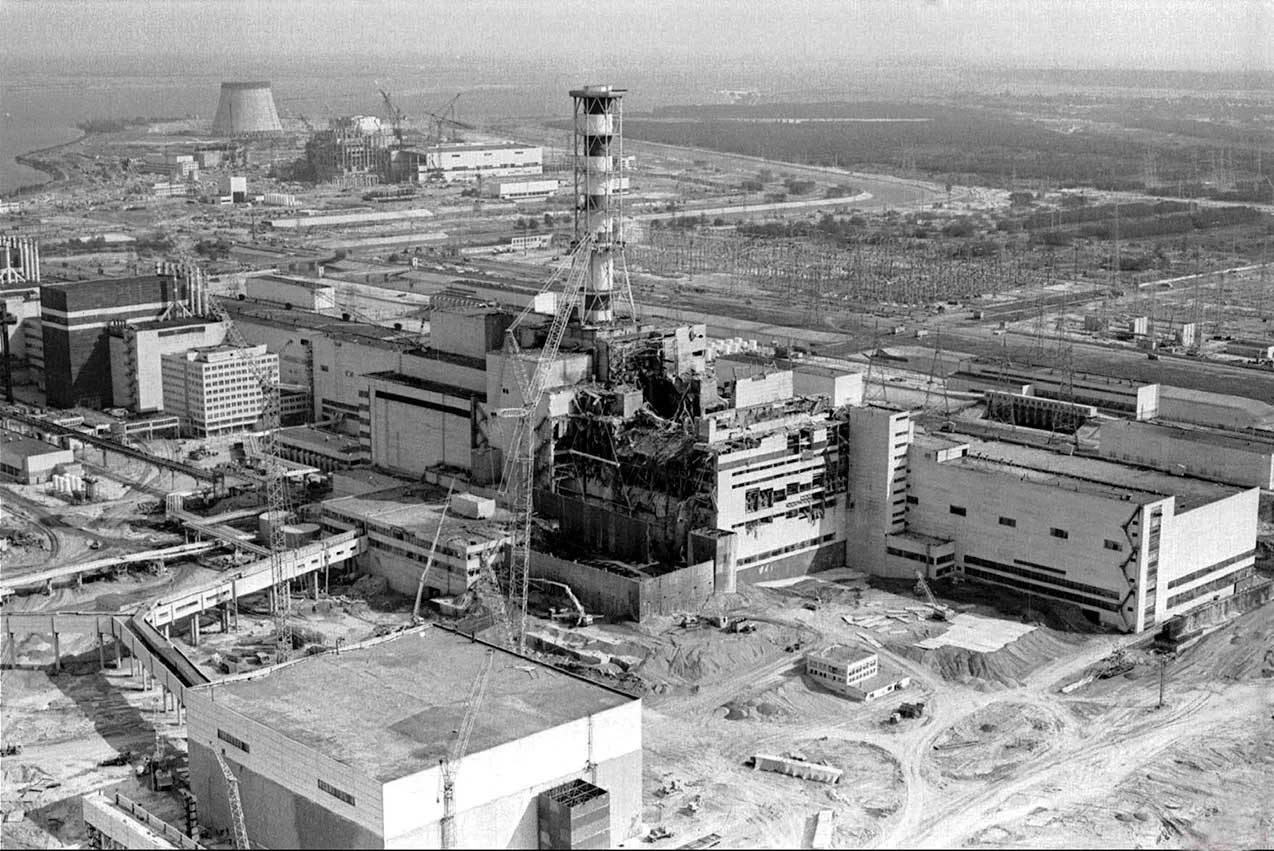
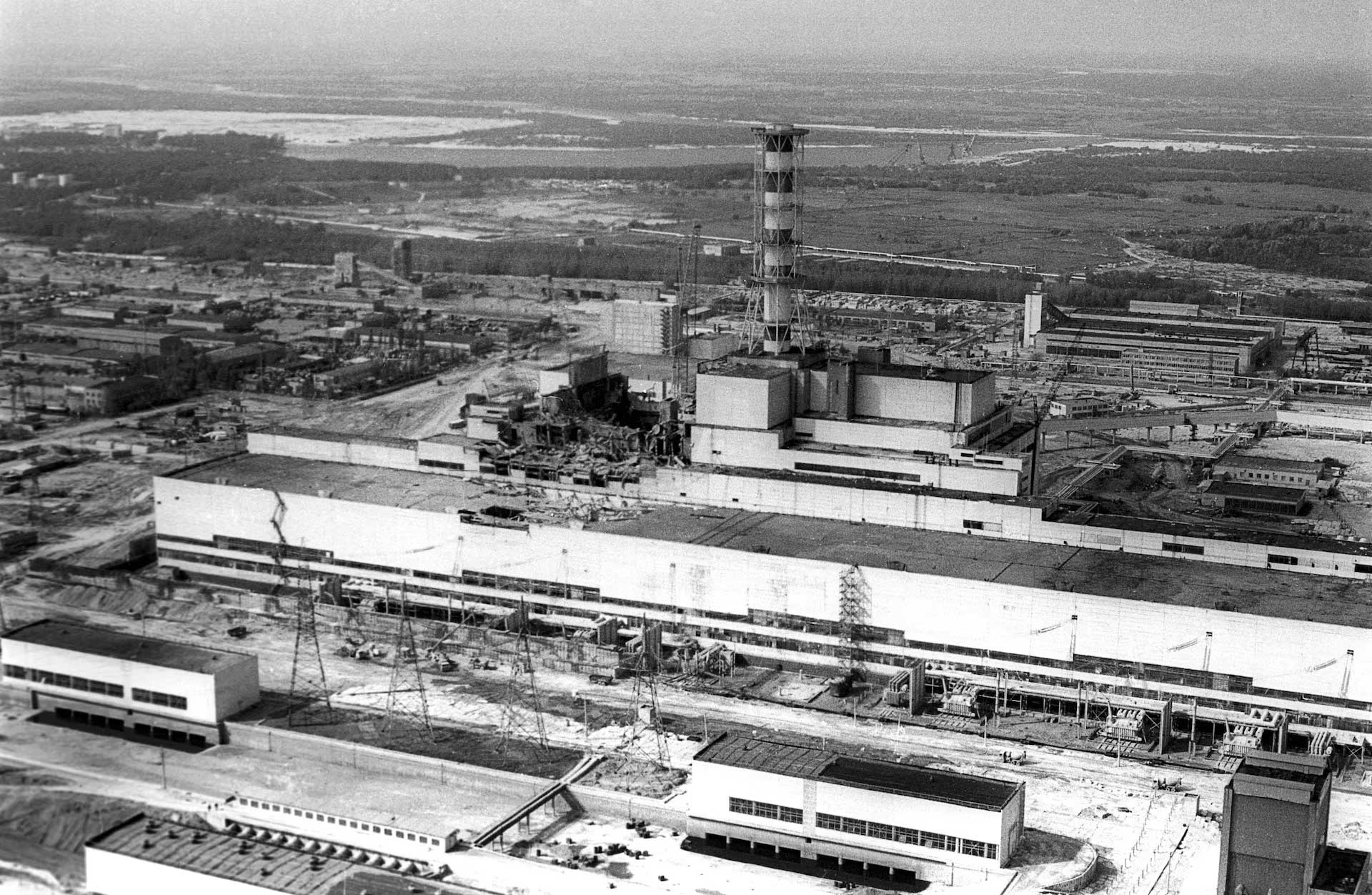
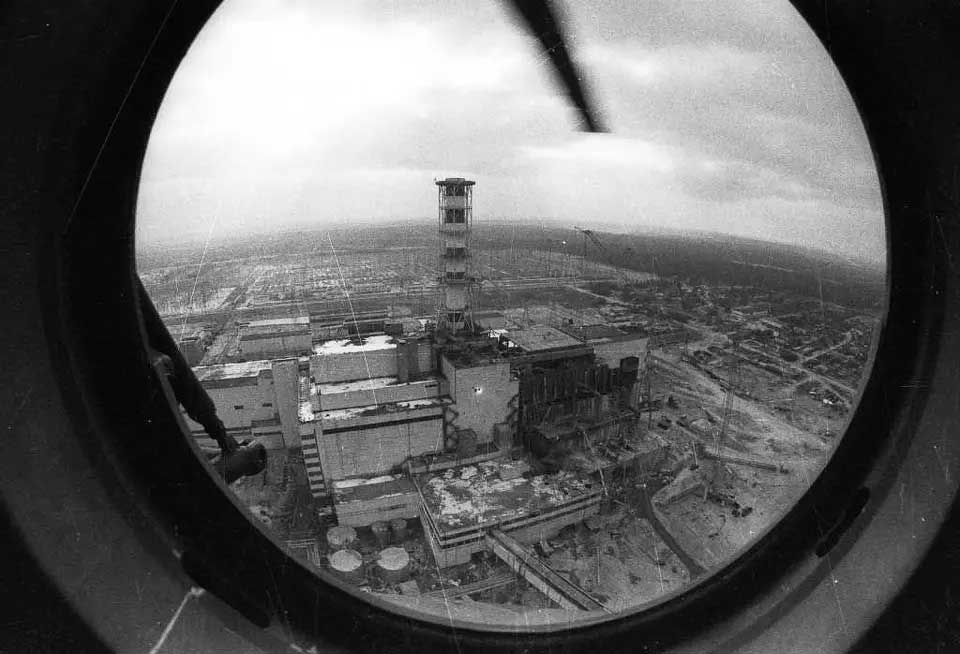
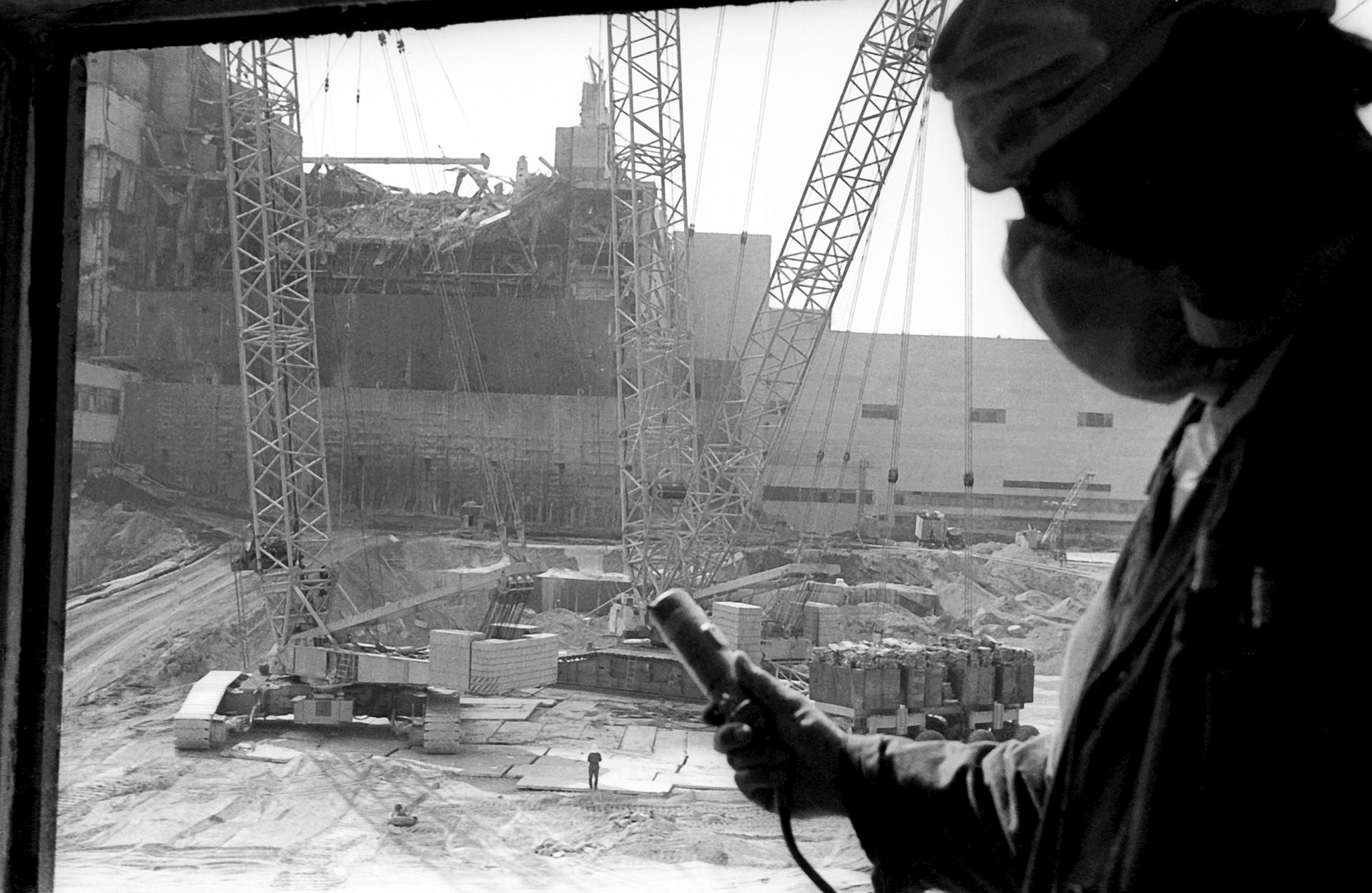
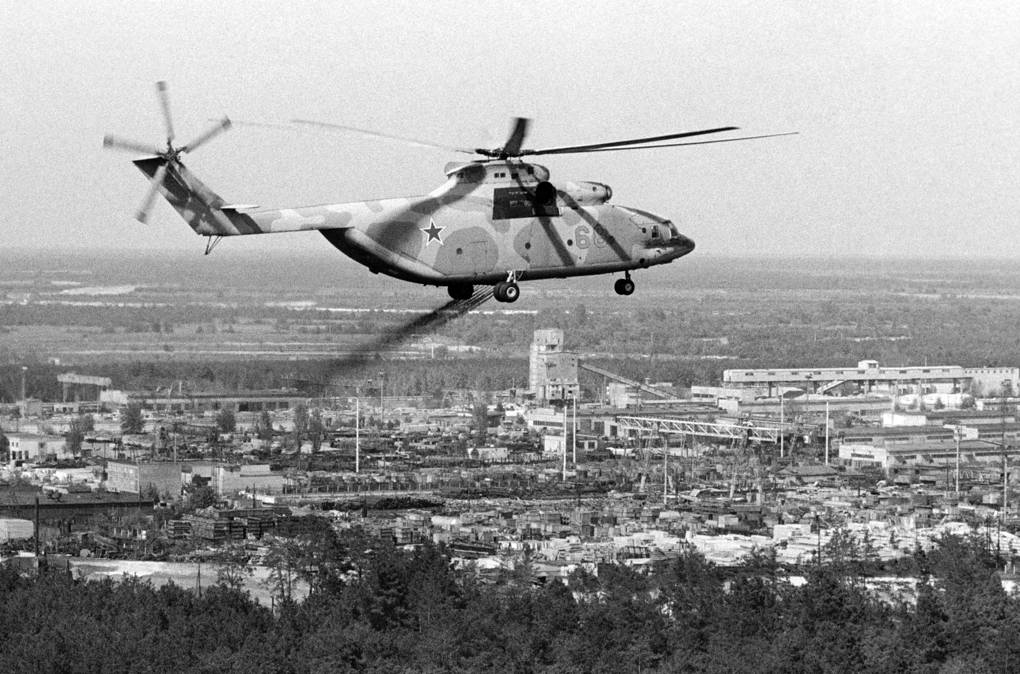
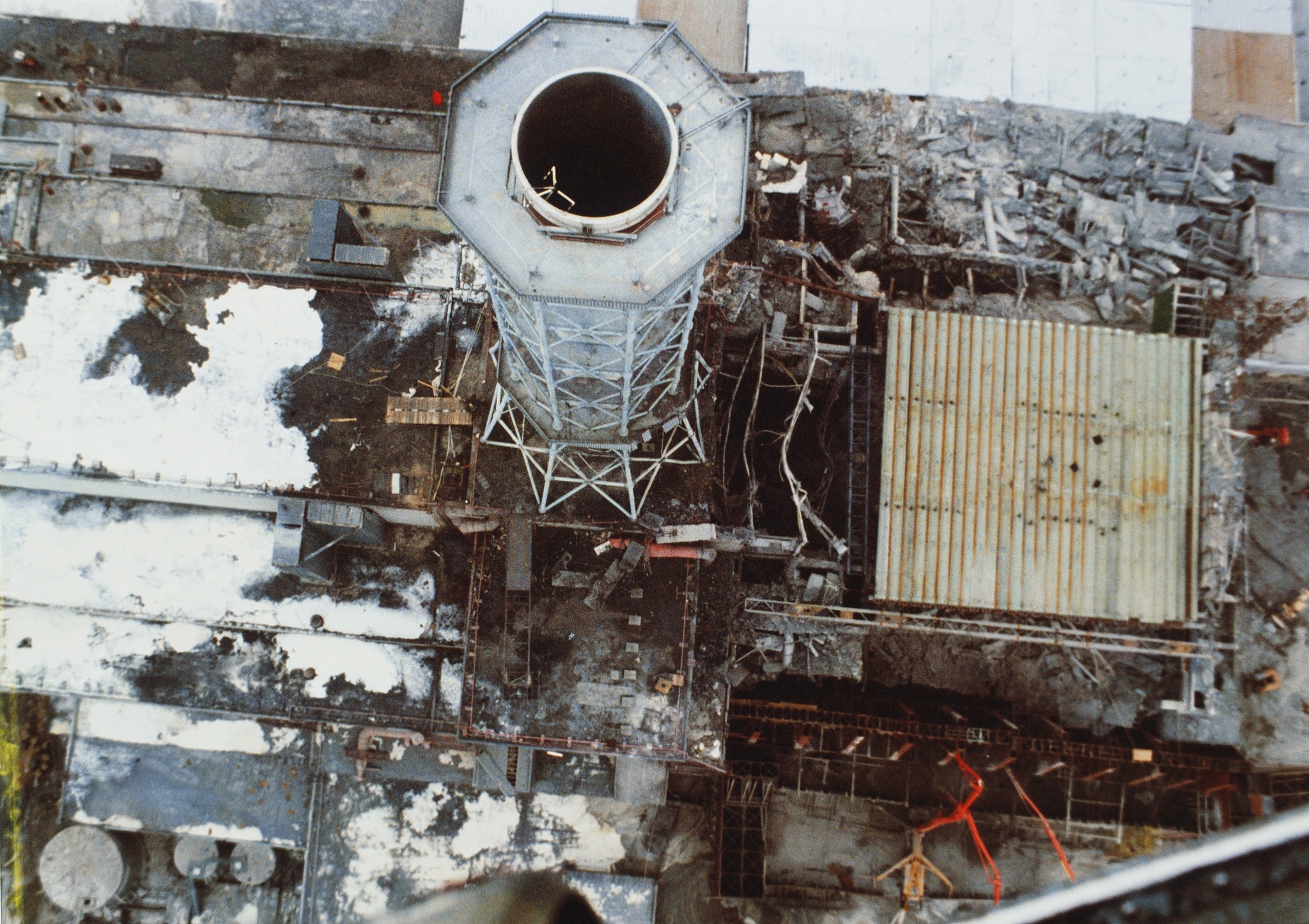
In this 1986 aerial view of the Chernobyl nuclear plant in Chernobyl, Ukraine shows damage from an explosion and fire in reactor four on April 26, 1986 that sent large amounts of radioactive material into the atmosphere. Only three Tass photographers were allowed in -- Volodymyr Repik, Igor Kostin and Valery Zufarov. Two later died of radiation-related illnesses, and Kostin suffered from the effects for decades before dying in a car accident in 2015. In this May 1986 file photo, the Chernobyl nuclear power plant, the site of the world's worst nuclear accident, is seen in Chernobyl, Ukraine. Twenty-five years ago, the Chernobyl Nuclear Power Plant exploded in Ukraine, spreading radioactive material across much of the northern hemisphere. The April 26, 1986 explosion at the Chernobyl nuclear power plant affected about 3.3 million Ukrainians, including 1.5 million children, according to Ukraine's Chernobyl Union report. The plant was closed for good in 2000. The Chernobyl nuclear power plant after the explosion of its fourth reactor.In this 1986 photo, a chimney and the sarcophagus under construction over the 4th destroyed reactor at the Chernobyl nuclear power plant is seen through a helicopter window. On May 12, 1986, more than two weeks after the explosion, the leading Soviet daily newspaper Pravda published its first photograph from the site for the first time, shot three days earlier from a helicopter by Repik. "If I had been ordered now to get aboard and go, I would not have gone _ you might have easily died there for nothing," said the 65-year-old Repik.In this 1986 photo, a helicopter throwing chemicals to suppress radiation approaches the 4th destroyed reactor at the Chernobyl nuclear power plant in. On May 12, 1986, more than two weeks after the explosion, the leading Soviet daily newspaper Pravda published its first photograph from the site for the first time, shot three days earlier from a helicopter by Repik. "If I had been ordered now to get aboard and go, I would not have gone _ you might have easily died there for nothing," said the 65-year-old Repik.In this 1986 photo, a helicopter throwing chemicals to suppress radiation approaches the 4th destroyed reactor at the Chernobyl nuclear power plant in. On May 12, 1986, more than two weeks after the explosion, the leading Soviet daily newspaper Pravda published its first photograph from the site for the first time, shot three days earlier from a helicopter by Repik. "If I had been ordered now to get aboard and go, I would not have gone _ you might have easily died there for nothing," said the 65-year-old Repik.In this 1986 photo, a Chernobyl nuclear power plant worker holding a dosimeter to measure radiation level is seen against the background of a sarcophagus under construction over the 4th destroyed reactor, Ukraine. On May 12, 1986, more than two weeks after the explosion, the leading Soviet daily newspaper Pravda published its first photograph from the site for the first time, shot three days earlier from a helicopter. (
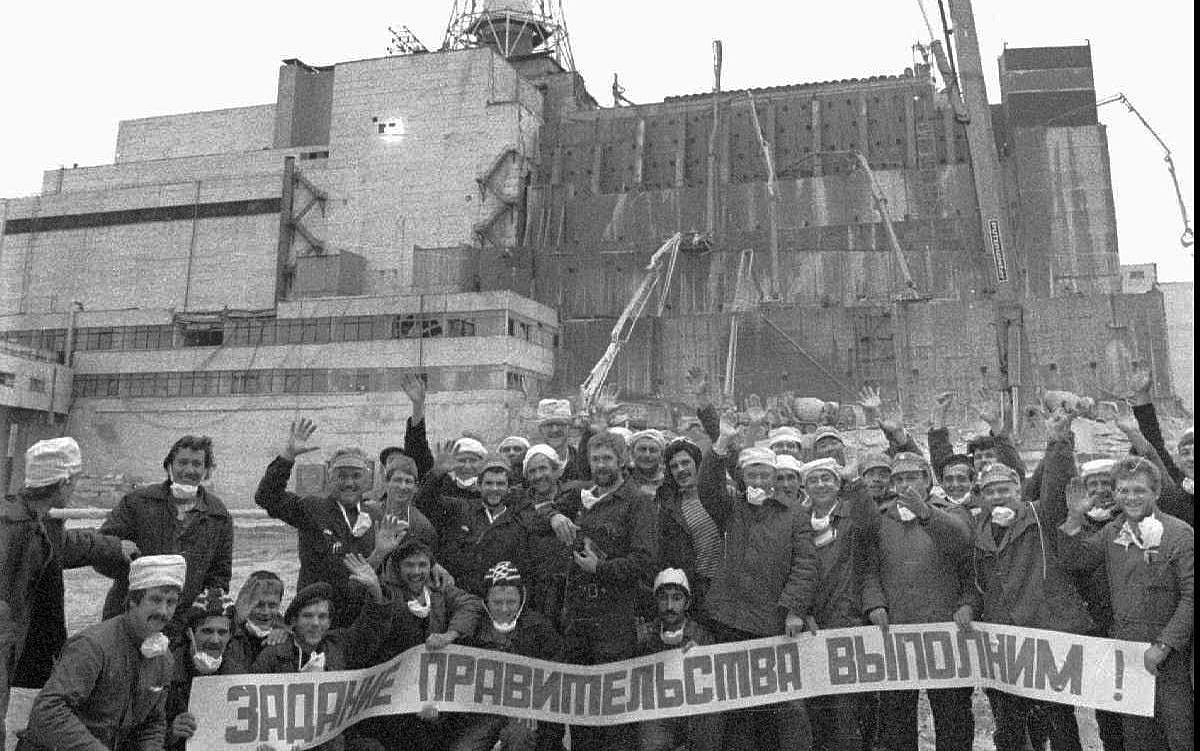
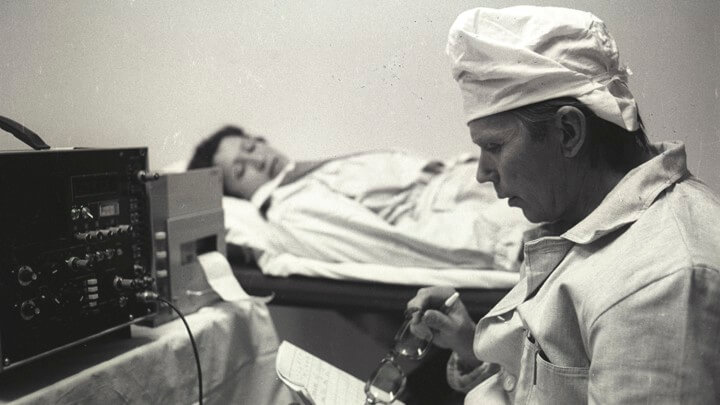
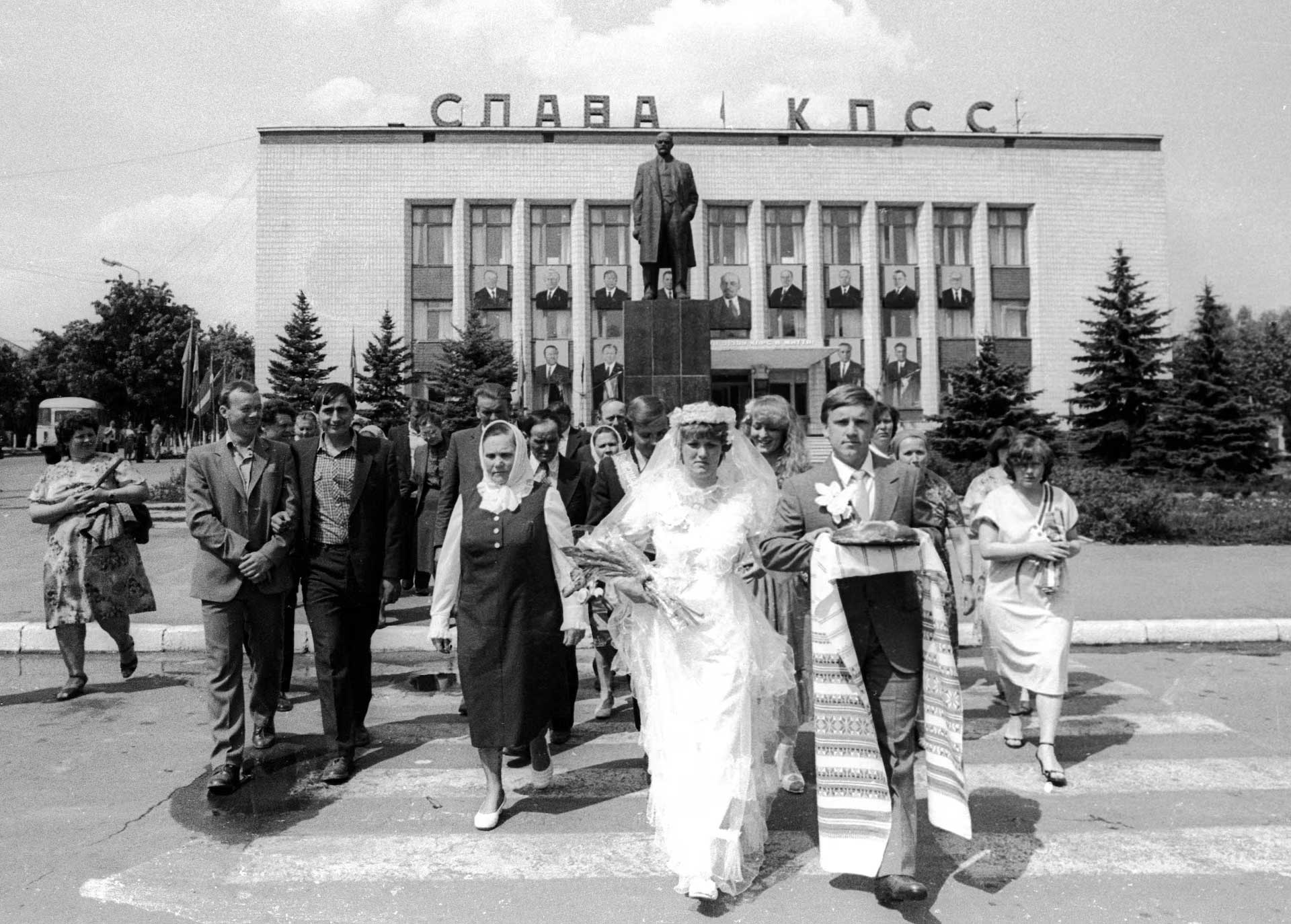
Workers who constructed the base for a cement sarcophagus to cover Chernobyl’s exploded Reactor 4 pose, in front of the still-exposed destroyed reactor building, with a poster reading: “We carried out the mission ordered by the government!”.An employee (back) of the Chernobyl nuclear power plant undergoes medical inspection at a medical center in the building of a young pioneers’ camp after the explosion of the fourth reactor in May 1986. A wedding party crosses a street weeks after the Chernobyl nuclear disaster in the settlement of Polesskoe, near Chernobyl
Alexander Kupnyi
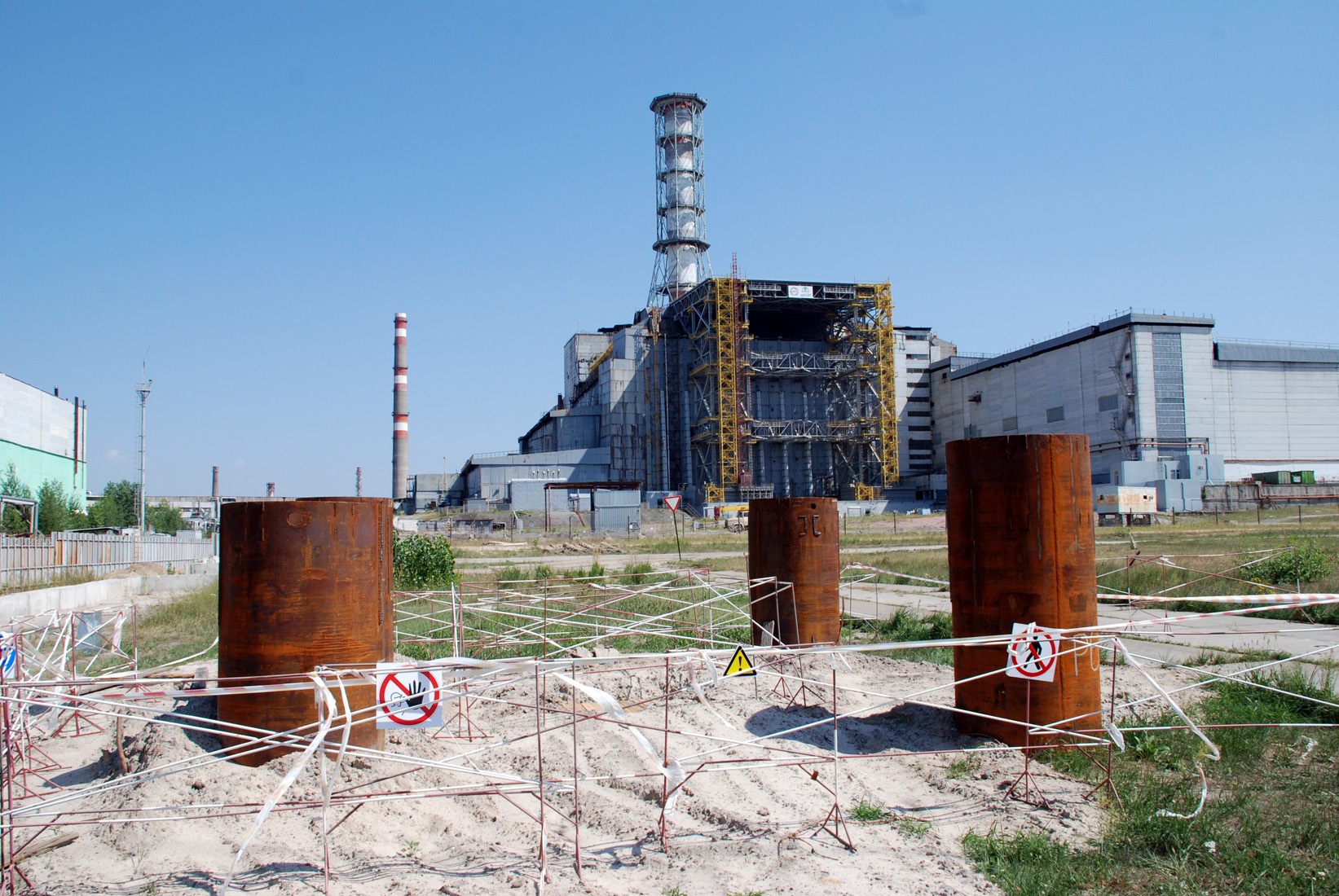
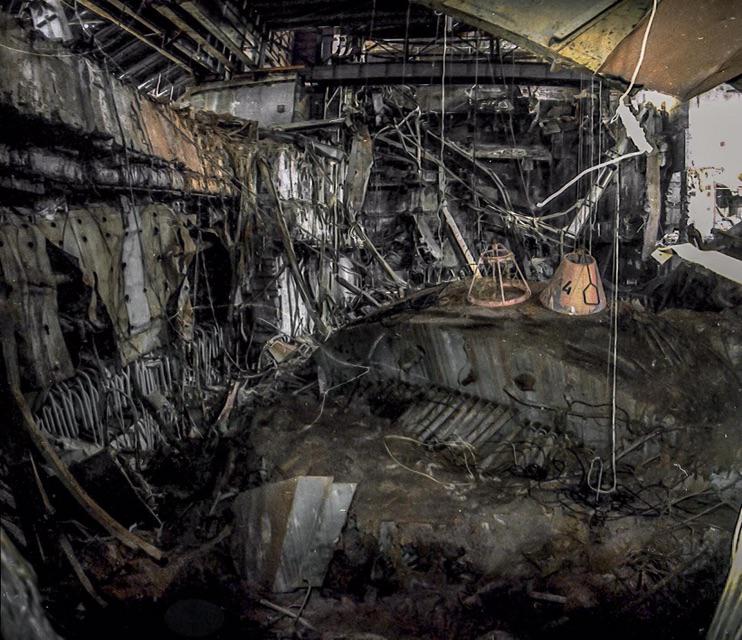
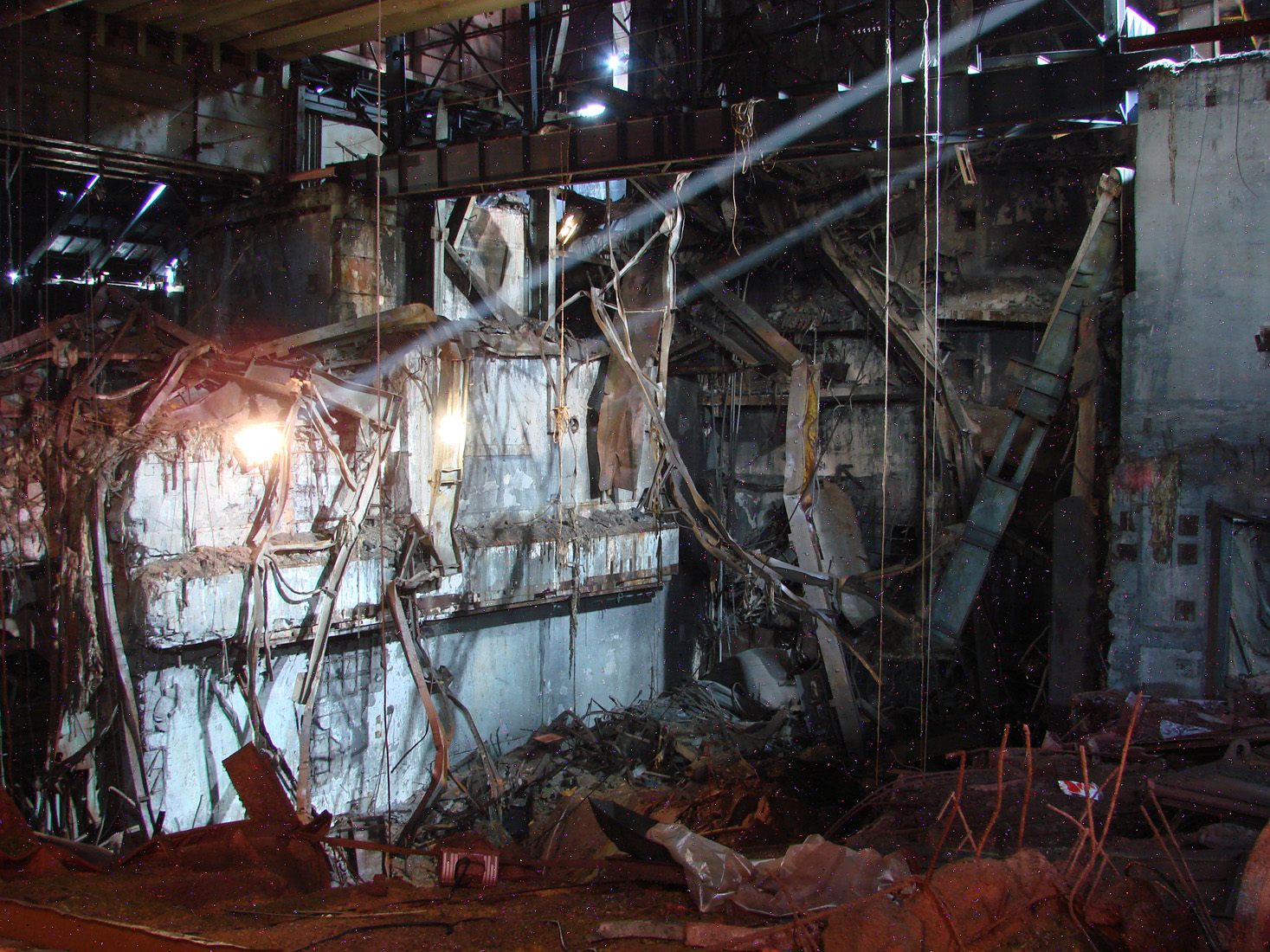
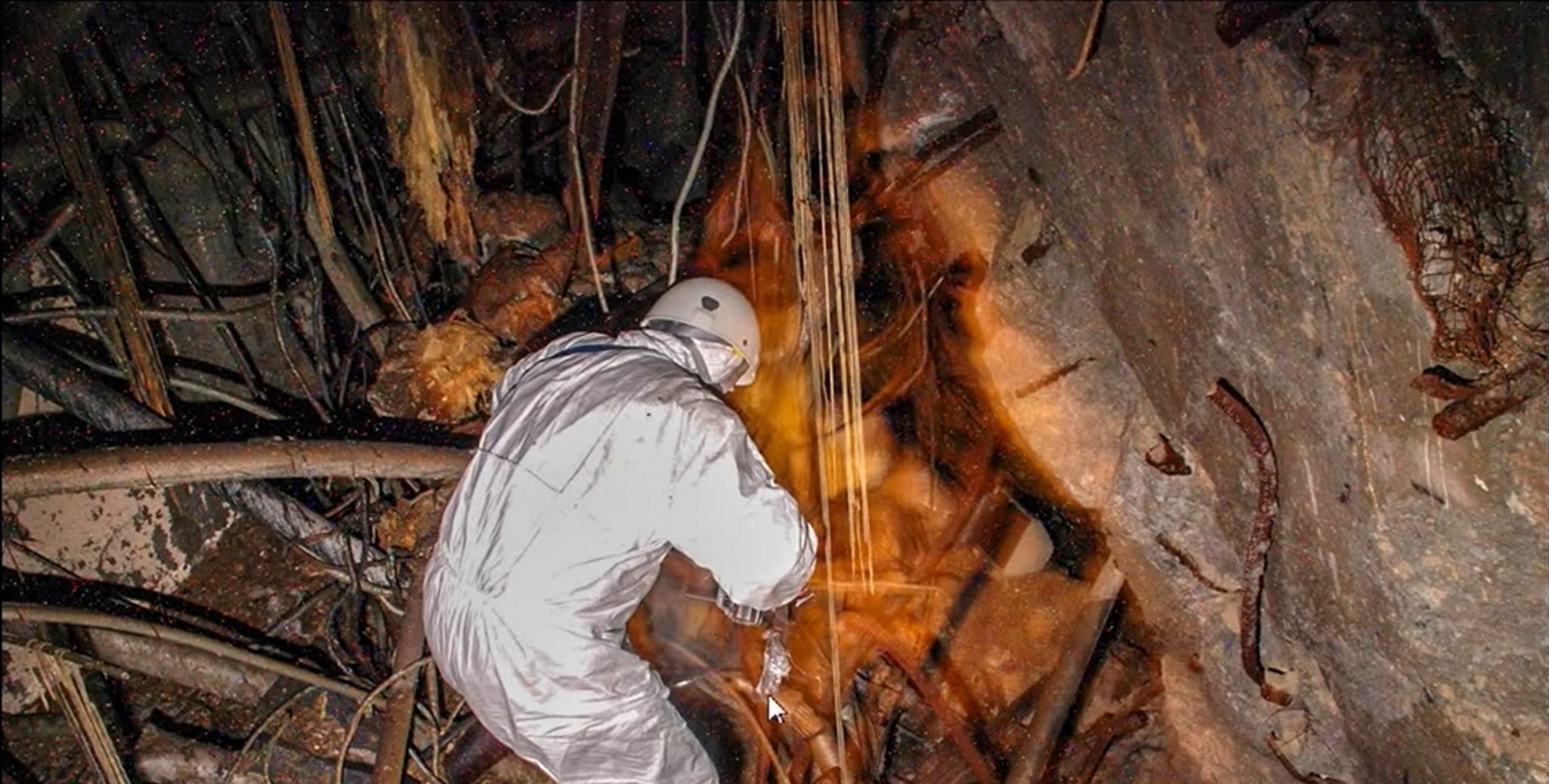
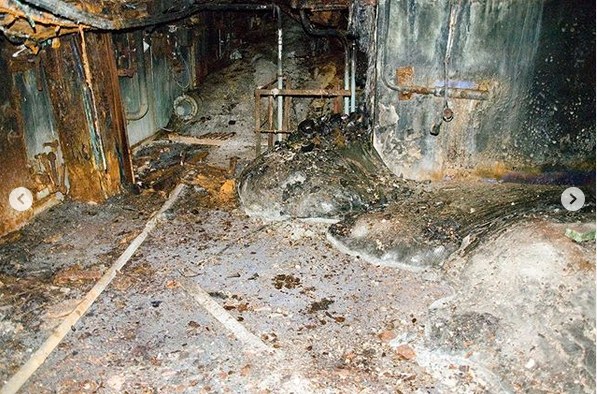
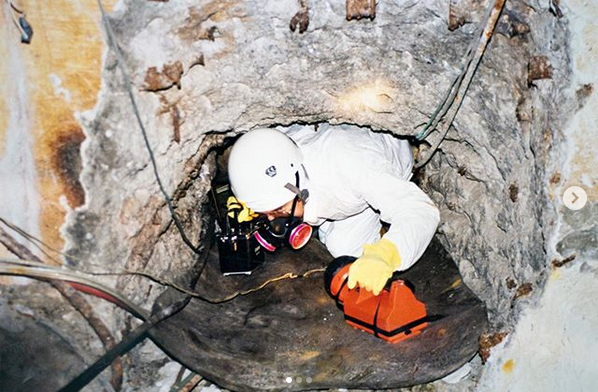
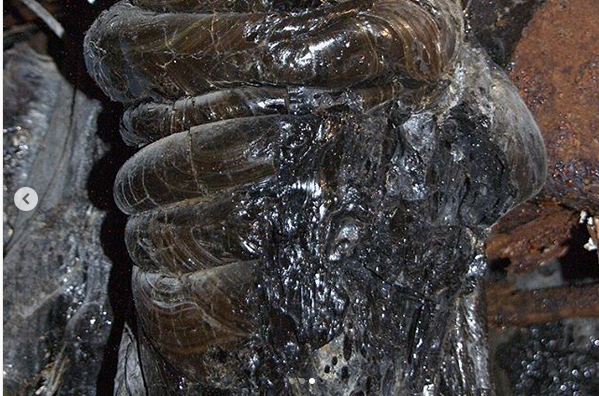
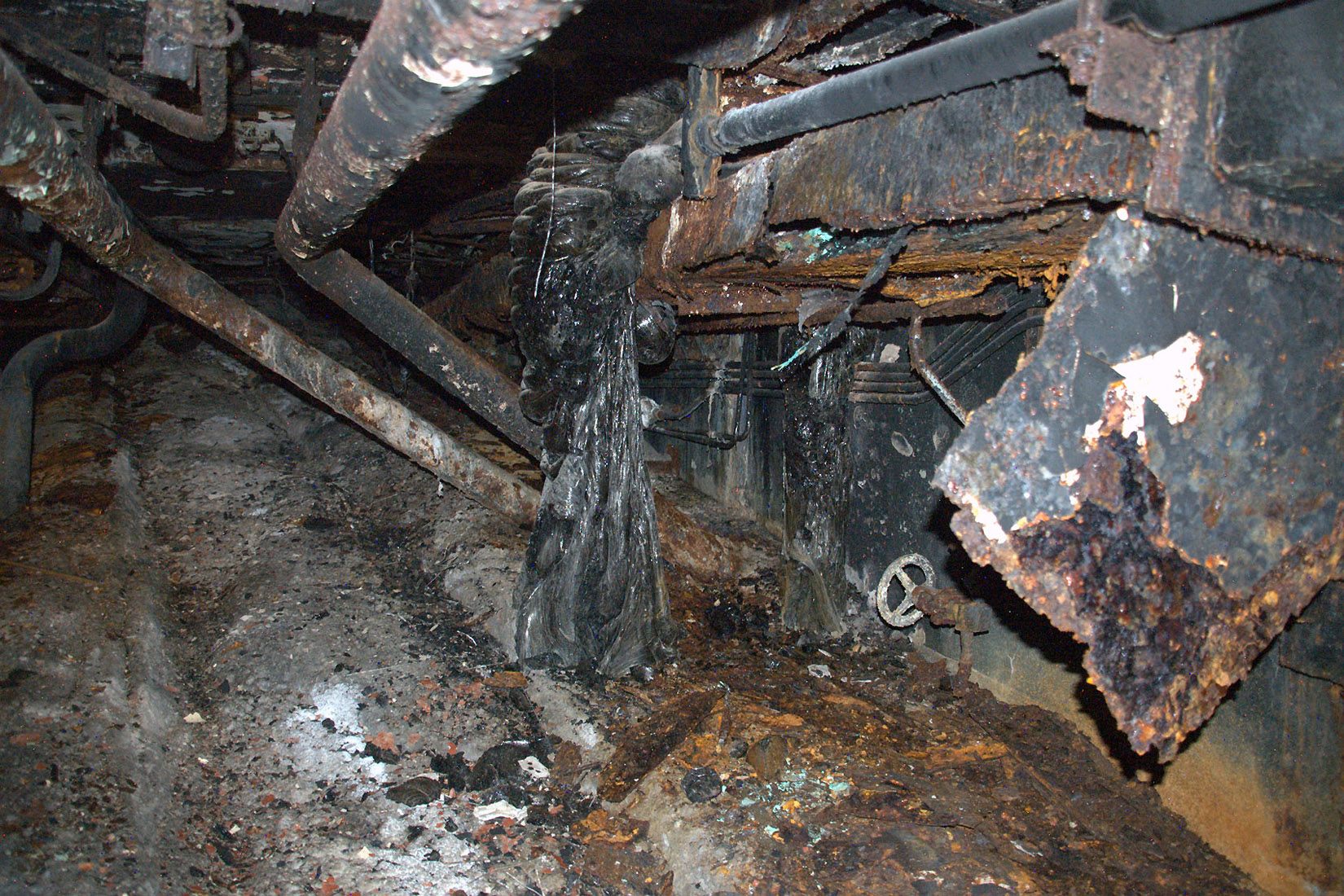
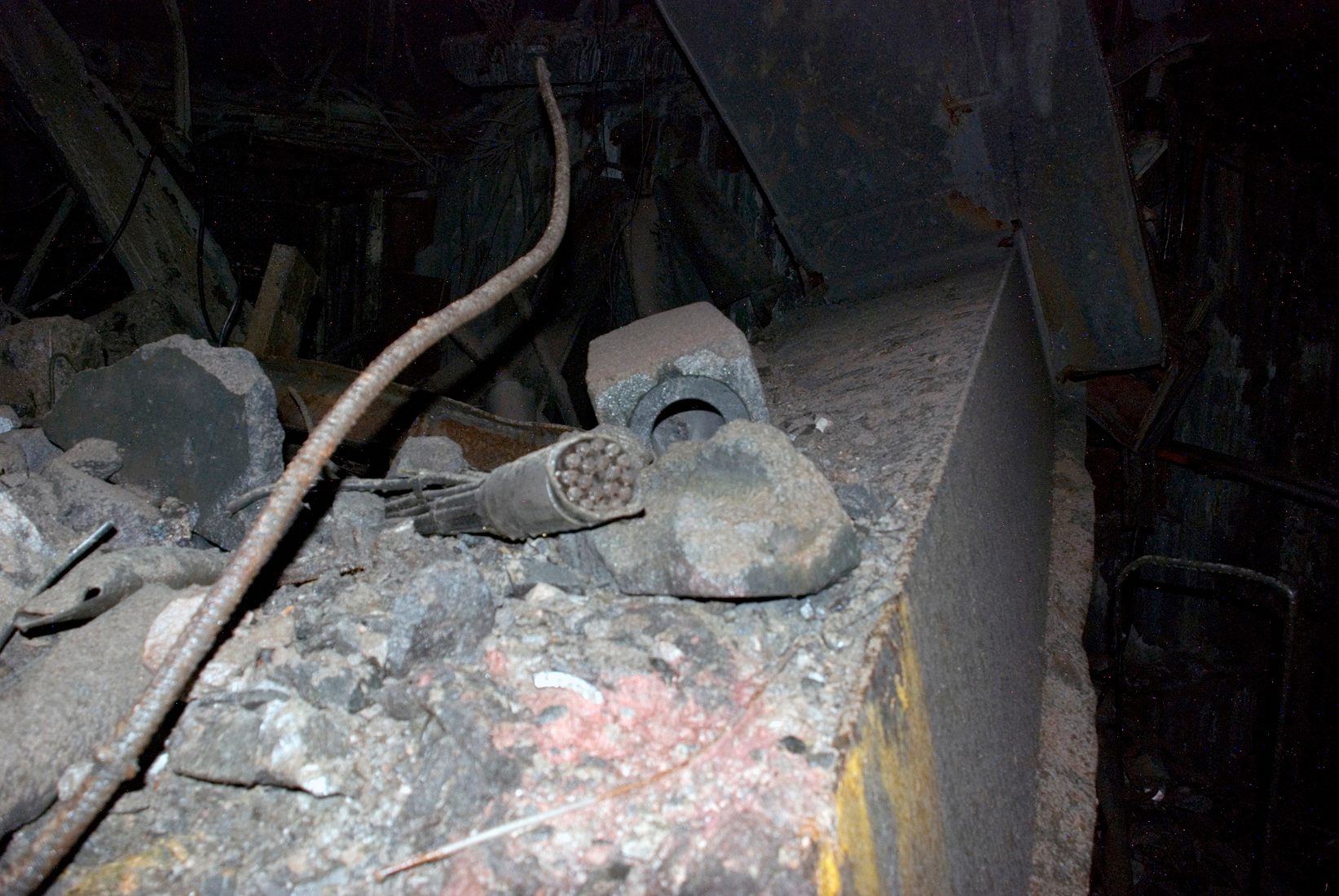
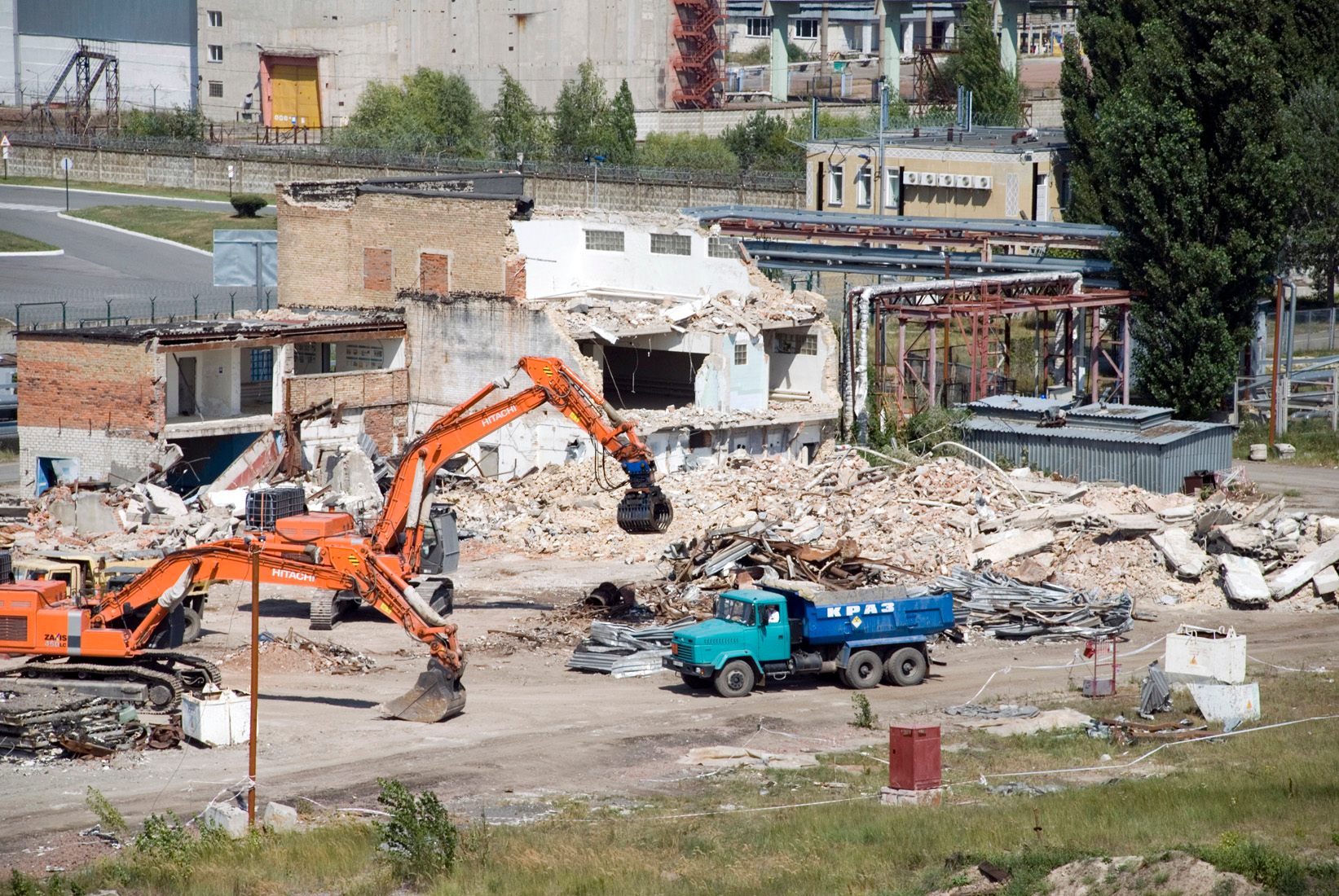
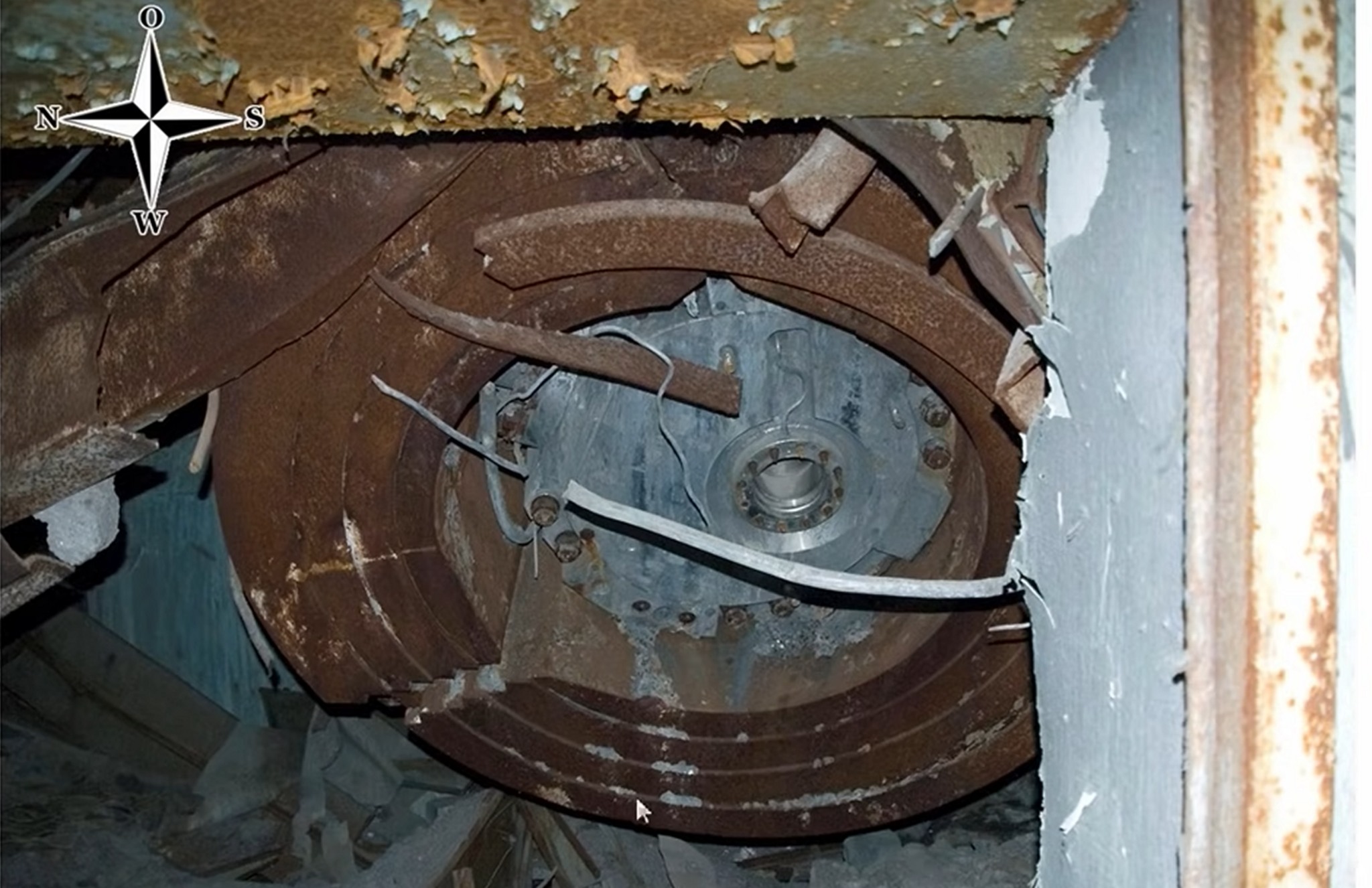
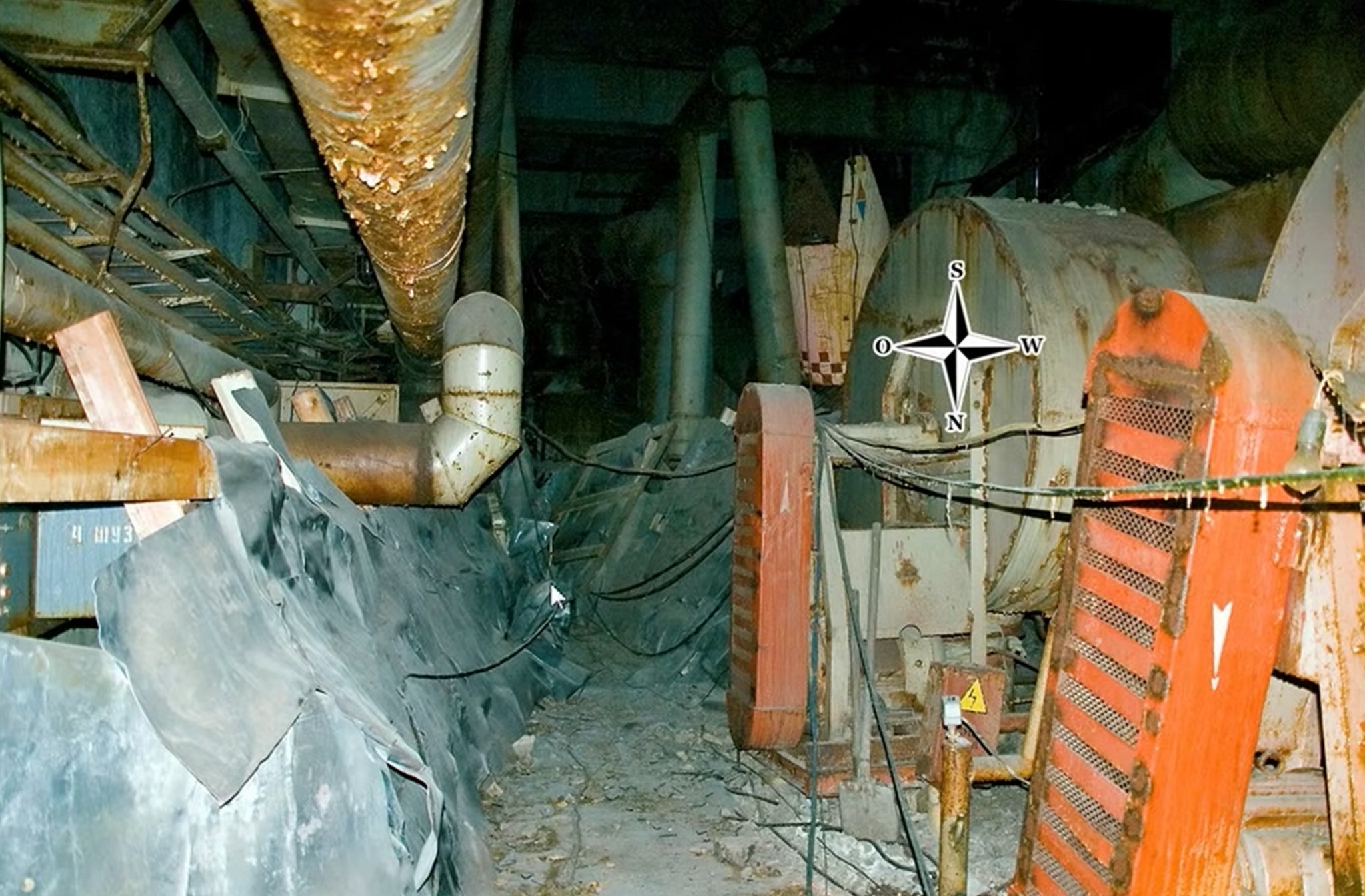
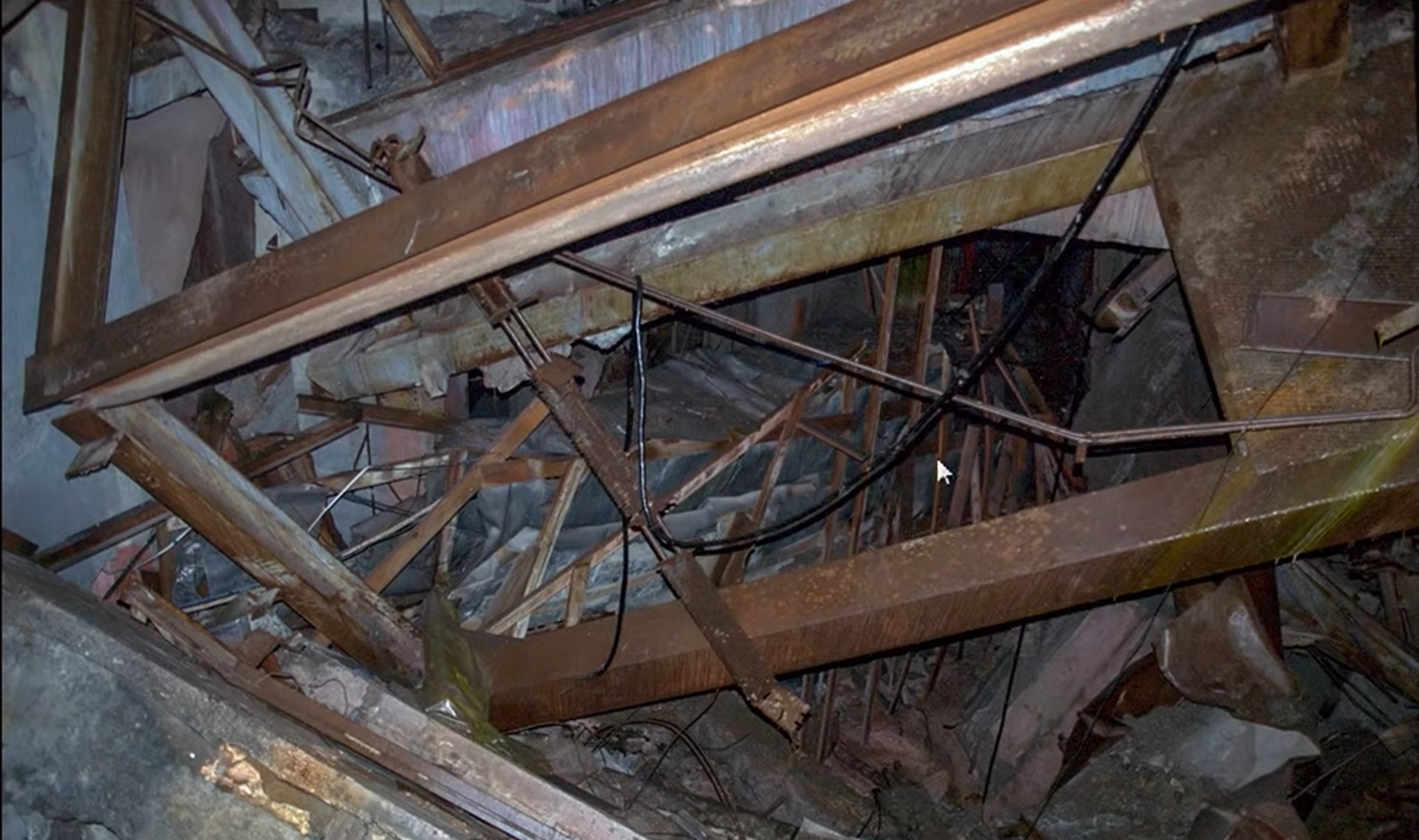
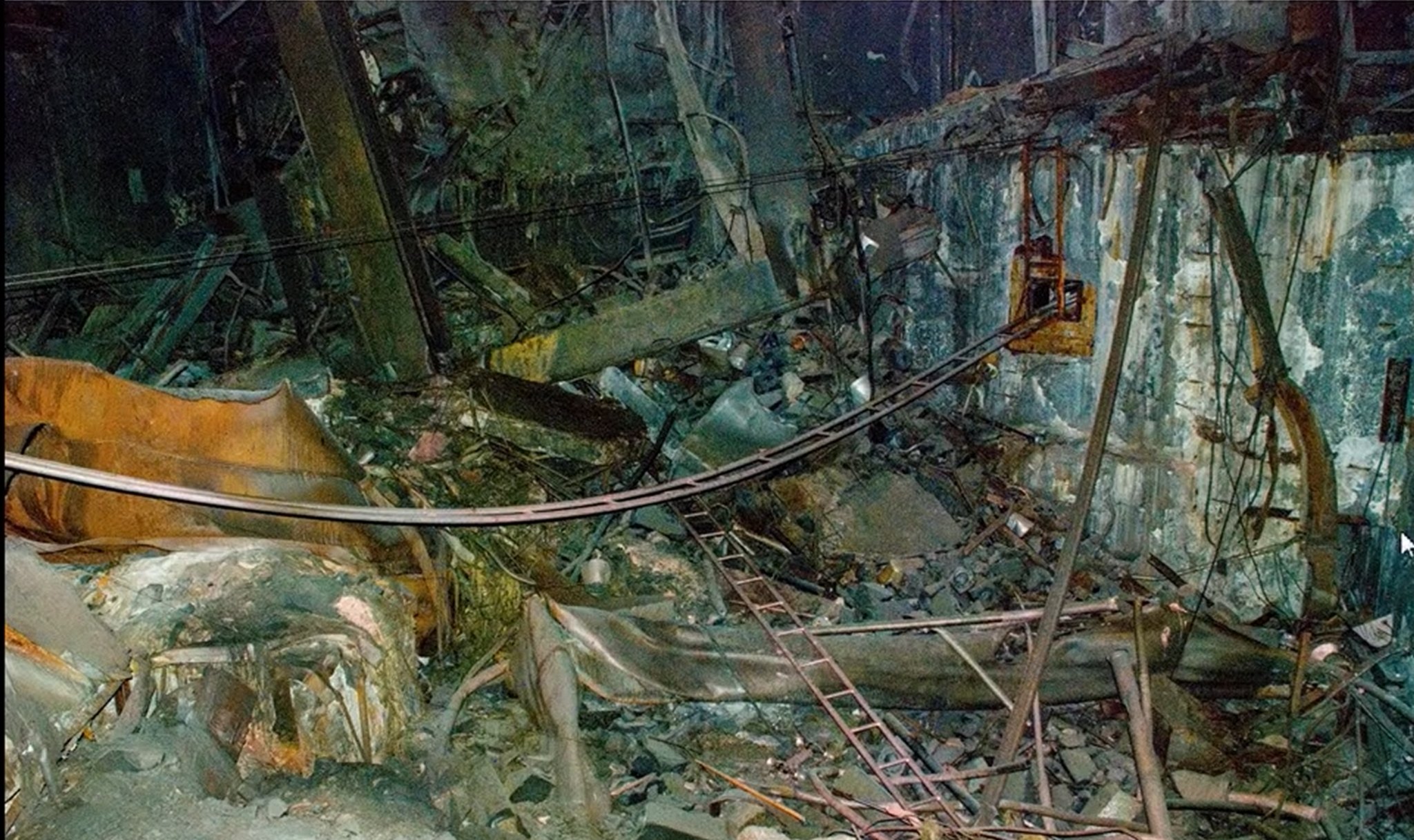
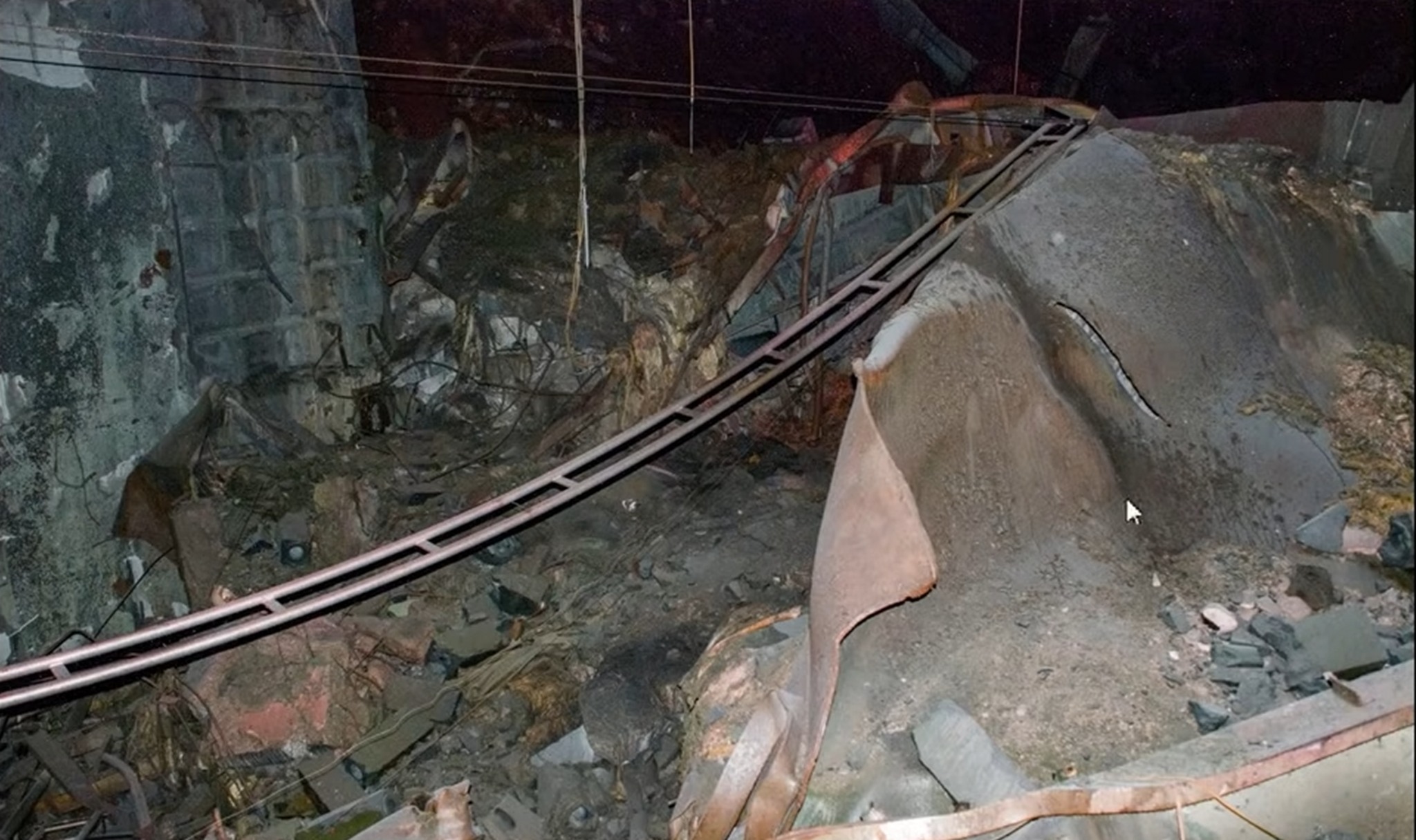
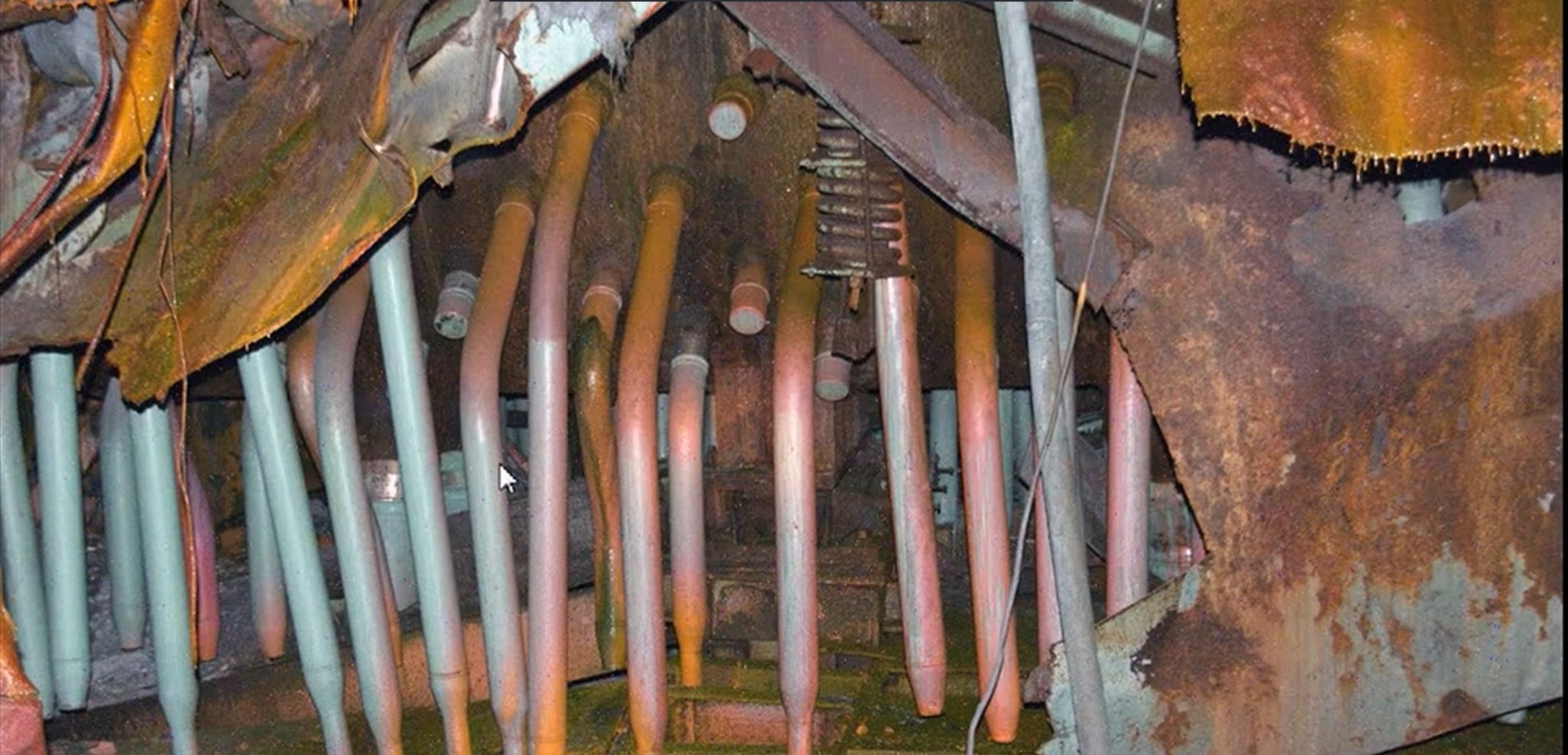
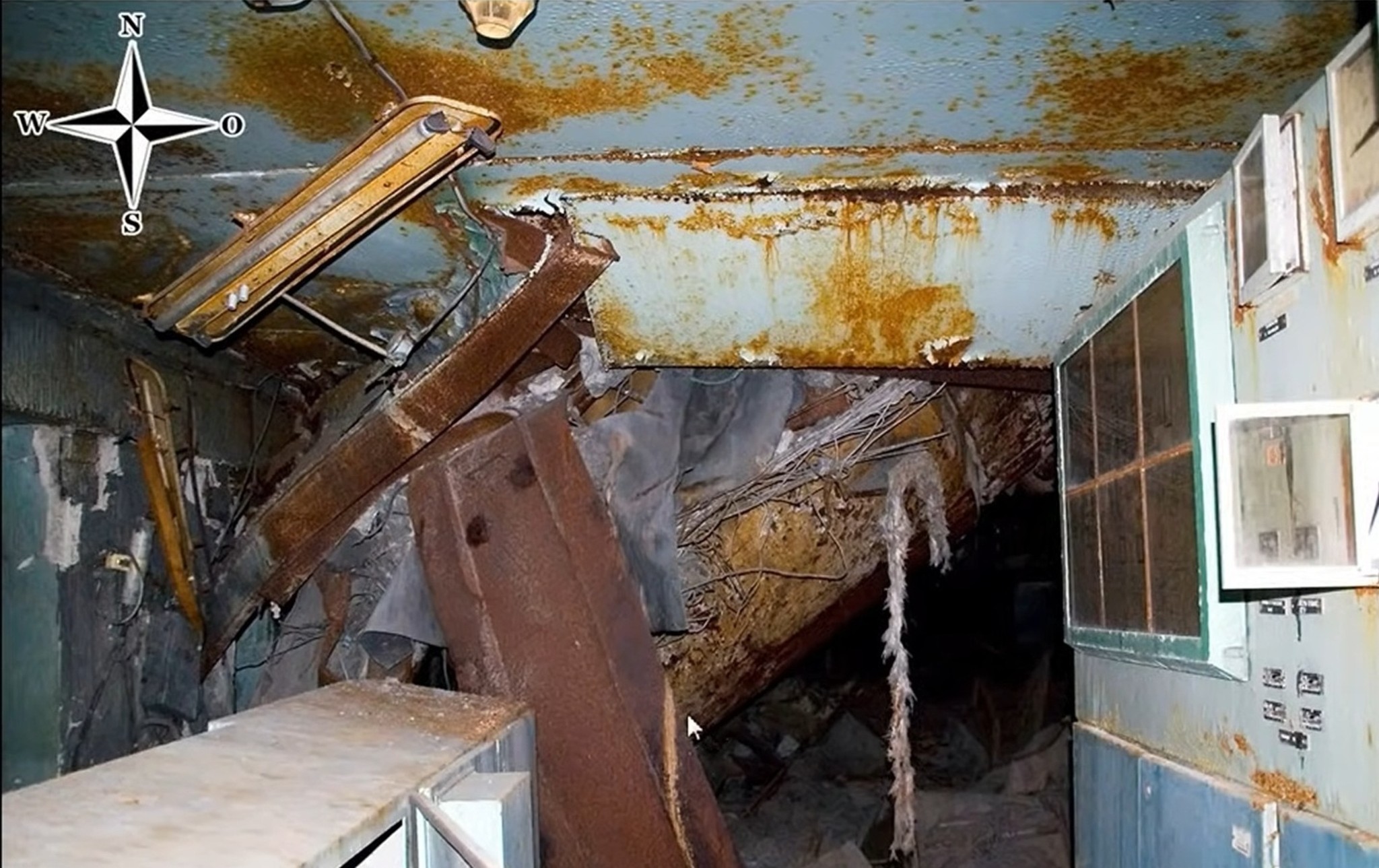
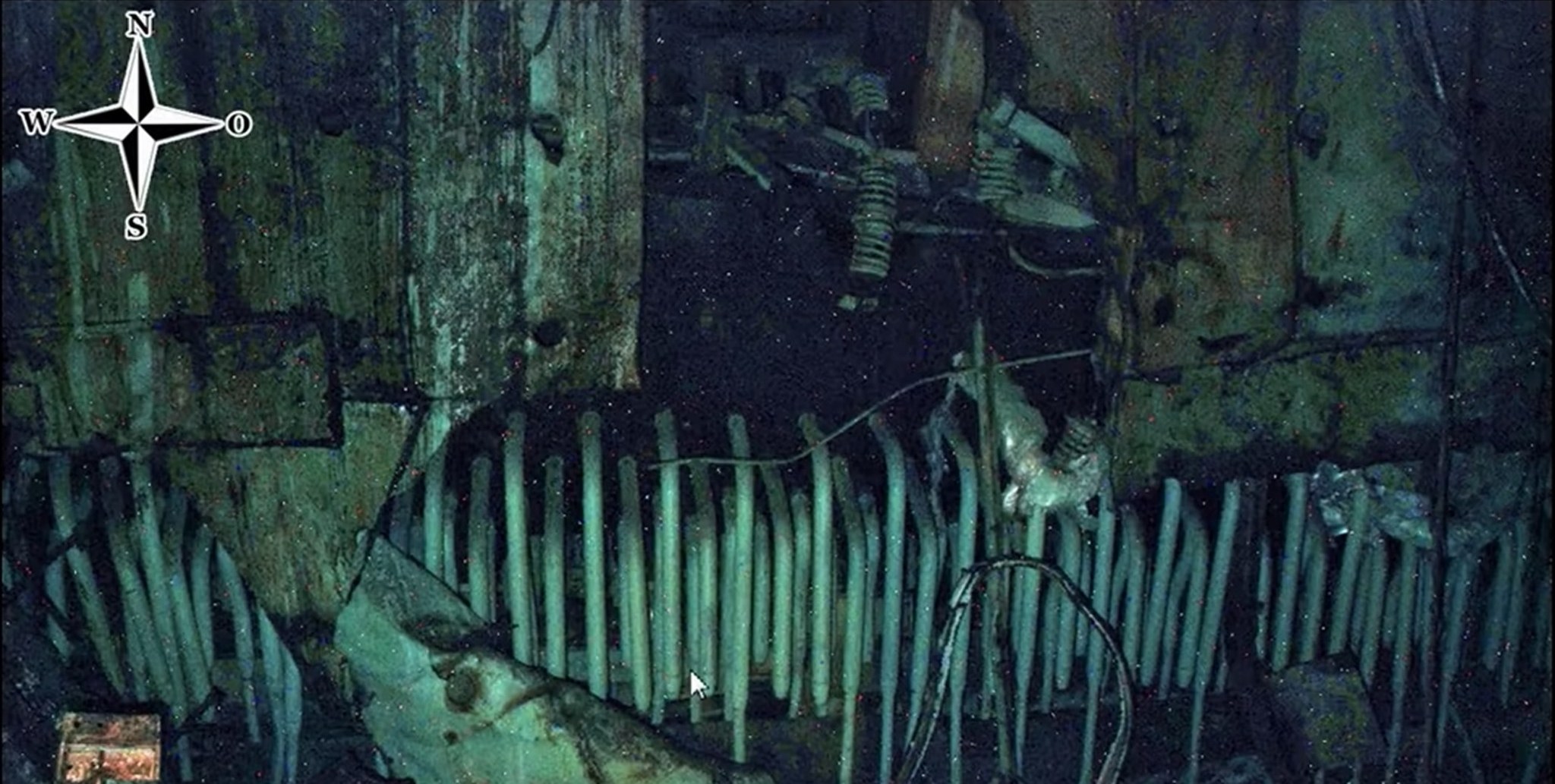
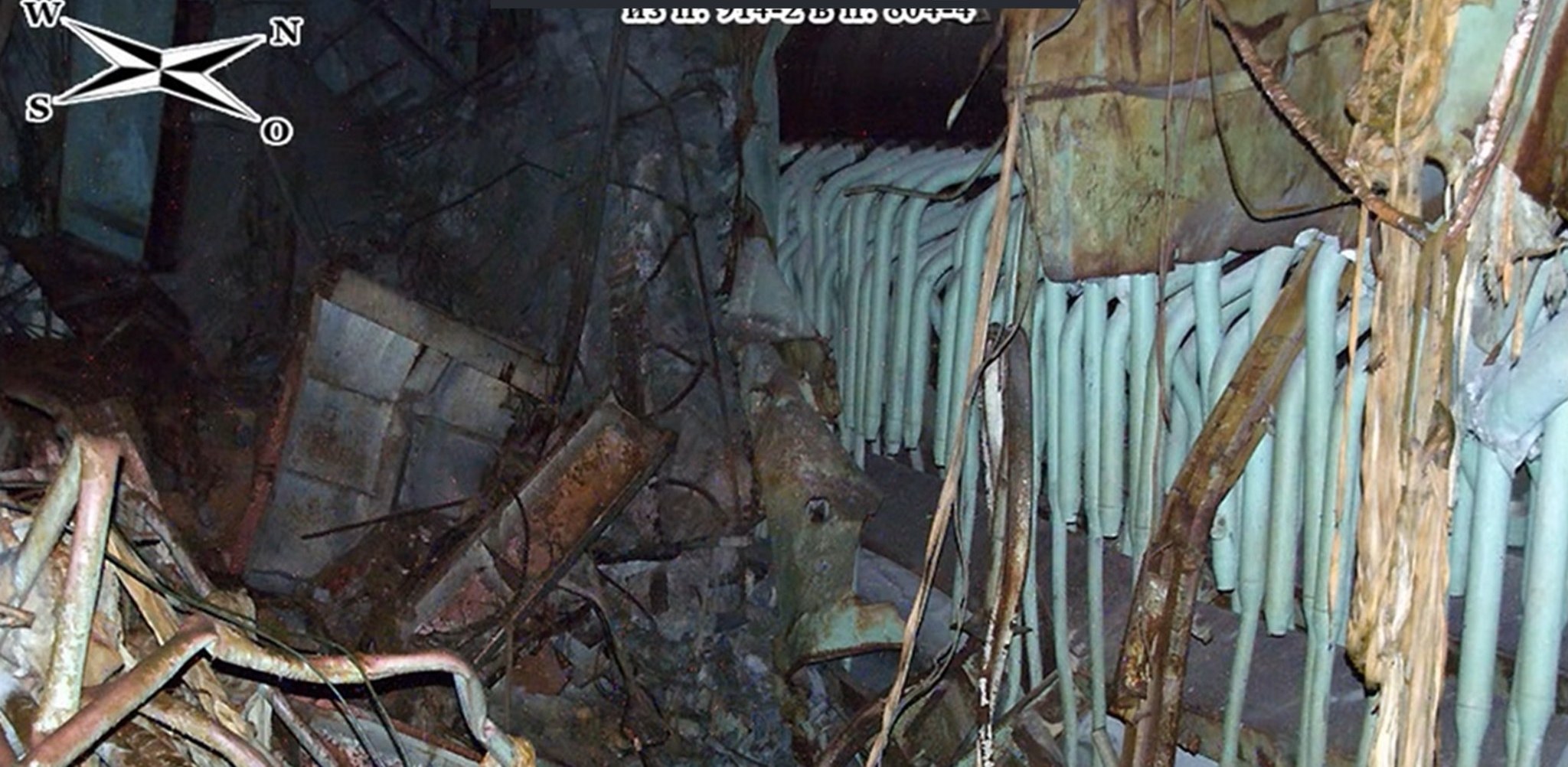
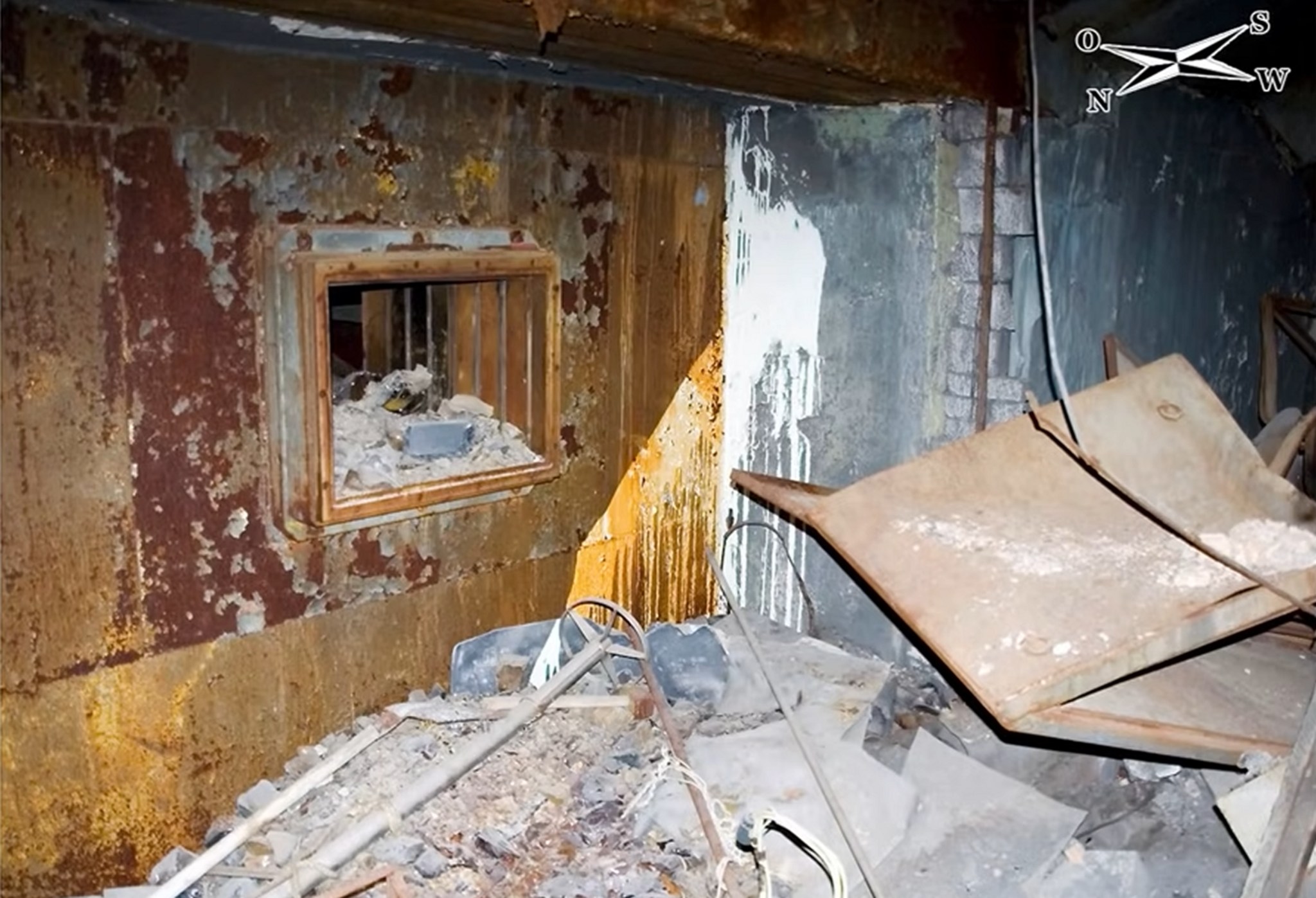
Rear view of sarcophagus.Inside Reactor 4Central hall of the ruined reactor.Inside the reactorTwo photos near the famous "Elephant Foot". It is located in 217 premise. Here the Fuel Containing Masses are ceramic, glasslike. Initially they were very firm and now they are depredated.Here I climb through the opening in the wall. This is a passage in 012 premise, a bubble-pool at zero level. In this premise there is a bunch of Fuel-Containing Masses. They look like harsh stone-fragile and porous. The reason for this — molten lava penetration from the reactor into the bubble-pool water.Fuel Containing Masses contain from 3 to 20 percents of Nuclear Fuel and all the rest are the molten materials of the Reactor Core, metal, graphite and concrete.“The elephants foot,” extremely radioactive, hardened lava from reactor fuel and metal.Remnants of uranium fuel rods.Deconstruction of power plant buildings.Bottom of RZMChernobyl Чернобыльской Is this the Upper Biological Shield?ChernobylGantry crane from top off reactor hall in backgroundPart of reactor side wall on right (that piece is made from thick reinforced steel)Probably, remanings of RZM in backgroundSteam separator drum pipingSteam separator drum piping from rightThat window from RZM room on reactor.
Valery Zufarov
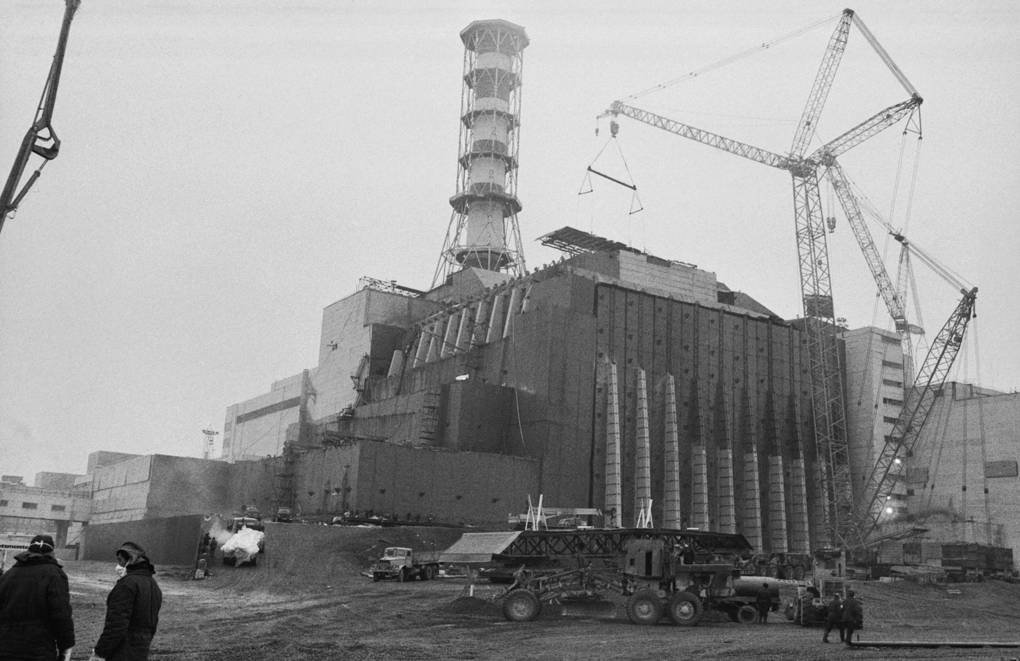
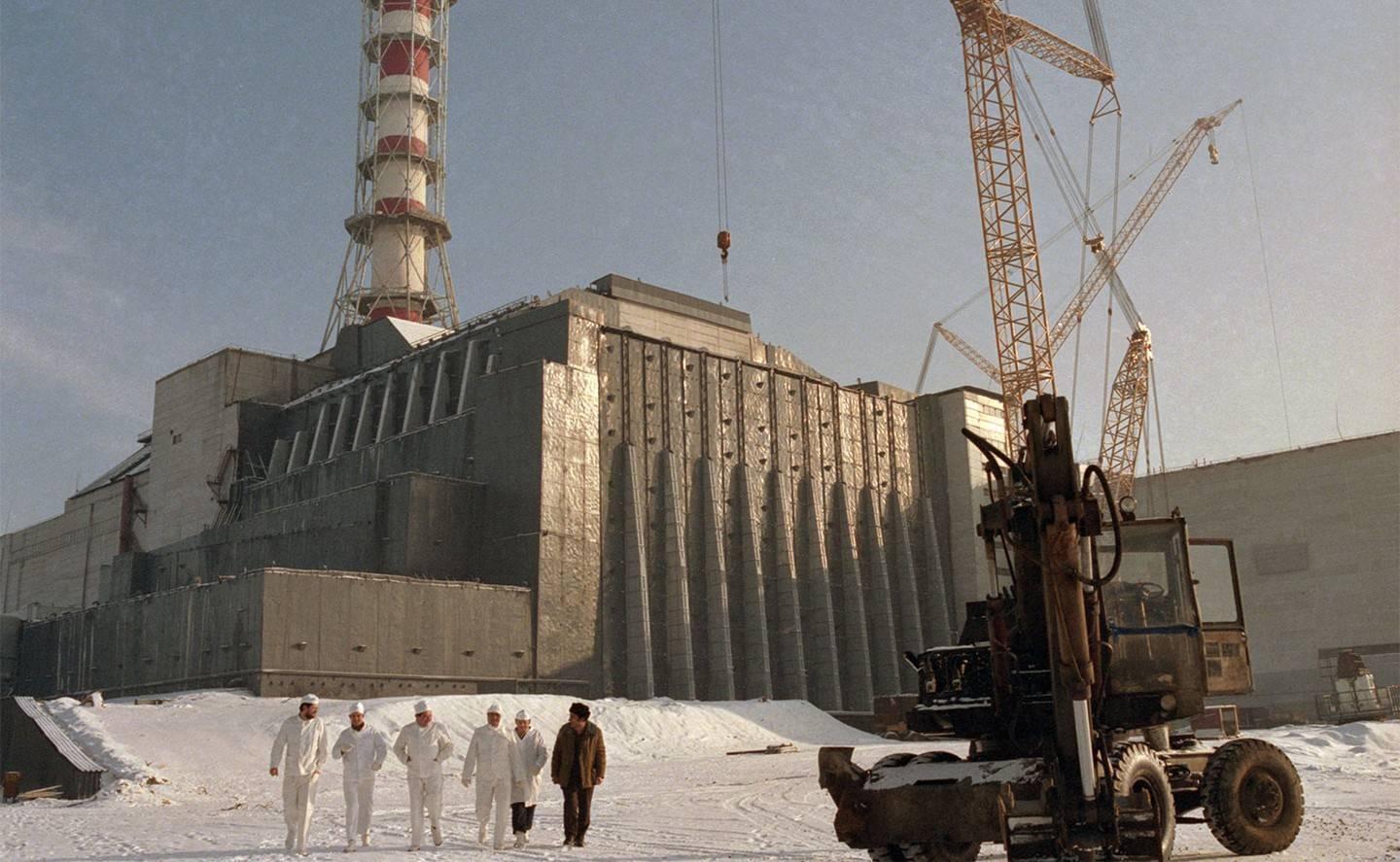
A helicopter sprays a decontaminate over the region surrounding the Chernobyl nuclear power stationChernobyl. Ukrainian SSR. USSR. Construction of a large concrete sarcophagus over the Reactor No. 4 at the Chernobyl Nuclear Power Plant. (Photo ITAR-TASS/ Valery Zufarov and Vladimir Repik)
Киевская область. Чернобыльская АЭС. Сооружение "саркофага" над 4-м энергоблоком. Фото Валерия Зуфарова /Фотохроника ТАСС/A general view of the sarcophagus over the 4th power unit under construction
February 1988
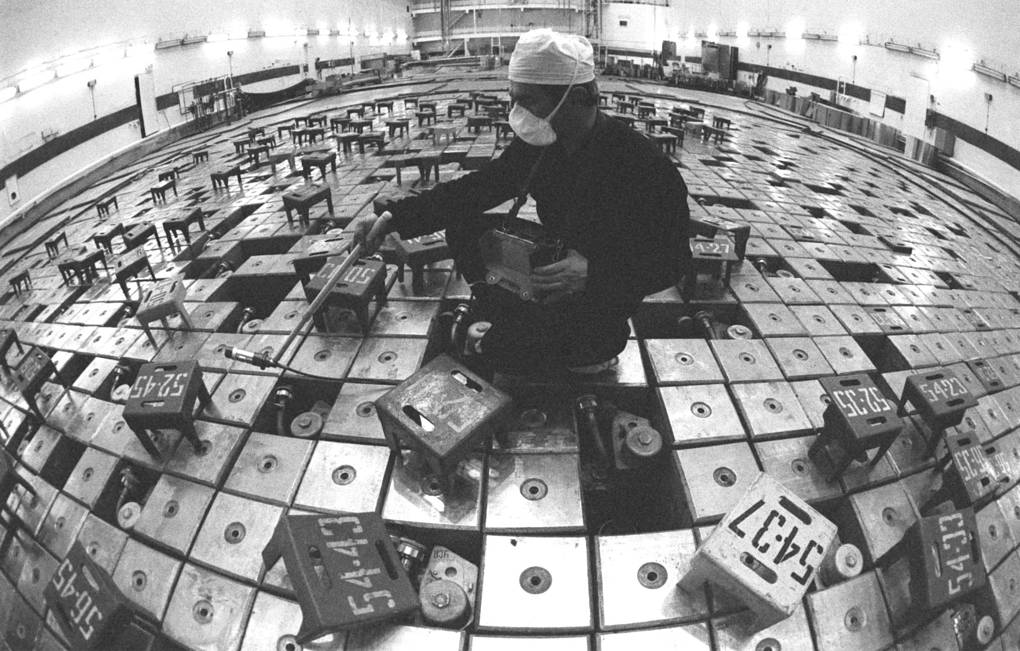
A worker checks the surface of a nuclear reactor for radiation levels, 1986
Liquidators recovering the Reactor hall No. 3 at the Chernobyl nuclear power station
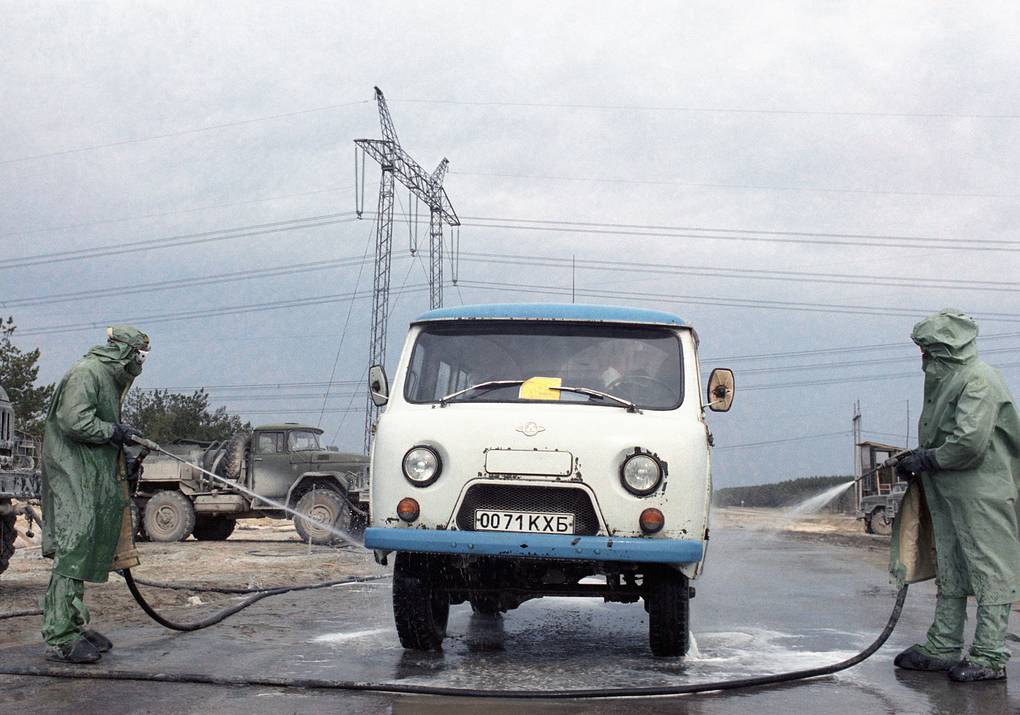
Sanitizing cars at leaving the Chernobyl Exclusion Zone, 1987
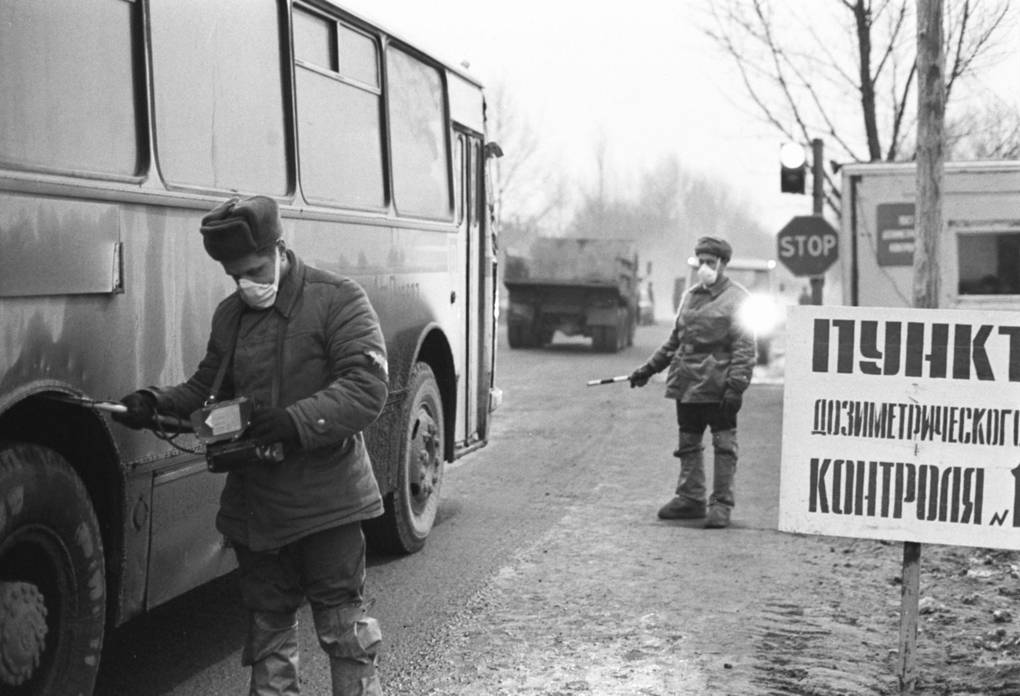
Worker of a Radiation Control Post monitors radiation level of a bus, leaving the Chernobyl Exclusion Zone, 1987
Chernobyl liquidators.